
Thomas Parker: Taste as biocultural, relational, and experiential (Ep463)
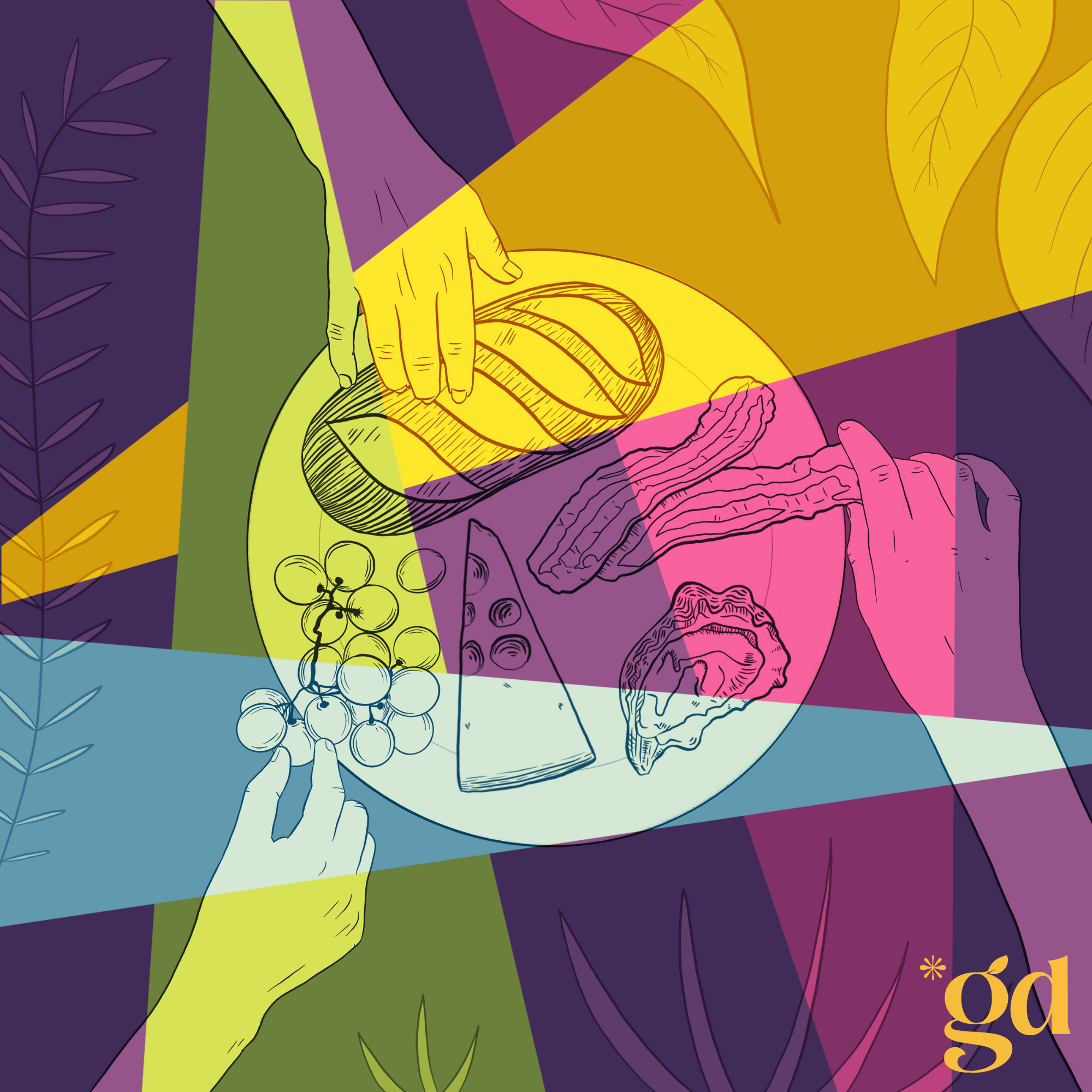
“I think trying to personalize the eating process as much as possible and connect with where the food, the vegetables, the cheese, the wine is coming from is really important... The experience makes the flavor of the food.”
Why is it that cuisines have historically been dismissed as a serious field of study? How have social factors, such as cultural norms and class, influenced people’s perceptions of the prestige or disgust of different foods across different times? And how are acquired tastes and market demands for food shaped by the broader food landscape that people are situated within?
In this episode, Green Dreamer’s kaméa chayne speaks with Thomas Parker, whose latest book is Paranatures in Culinary Culture: An Alimentary Ecology.
Join us as we explore what is possible when we deepen our connections with the sources of our foods, and what it means to understand taste as multi-sensorial, experiential, and context-dependent — not just based on the objective biochemical compositions of what we ingest.
We invite you to…
tune in and subscribe to Green Dreamer via any podcast app;
tap into our bonus extended and video version of this conversation on Patreon here;
and read highlights from these conversations via Kaméa’s newsletter here.

About our guest:
Thomas R. Parker is associate professor and chair of French and Francophone studies at Vassar College. He is the author of Paranatures in Culinary Culture: An Alimentary Ecology, Volition, Rhetoric, and Emotion in the Work of Pascal and Tasting French Terroir: The History of an Idea.
Artistic credits:
Episode artwork: Taylor Tinkham
Song feature: “I am the Earth” by Olivia Mancuso (@oliviamancusomusic)
Dive deeper:
Paranatures in Culinary Culture: An Alimentary Ecology, a book by Thomas Parker
Tasting French Terroir, a book by Thomas Parker
Subnature: Architecture's Other Environments, a book by David Gissen
Le parasite, a book by Michel Serres
Discover more about biologist Rob Dunn’s experiment with bread and microbes
Learn more about the Ama osyter divers in Japan
Expand your lenses:
Independent media is more important than ever! Please consider joining our Patreon or making a one-time donation today.
interview transcript
Disclaimer: Please note that Green Dreamer’s interviews are minimally edited (both audio and non-verbatim transcript) for clarity and brevity only. All statements should be understood as commentary based on publicly available information, and the views expressed in this interview are those of the guest and host only and do not necessarily reflect the views of Green Dreamer.
While we have made reasonable effort in our interview research and production process to ensure accuracy, we do not present our commentary as factual assertion and we are unable to guarantee the completeness or correctness of every piece of information shared. As such, we invite you to view our publications as references and starting points to dive more deeply into each topic and thread explored. Thank you for adventuring with us.
Kaméa Chayne: I think I wanna start off by just sharing that food, for me, is very political, very historical, definitely cultural, and entirely environmental and more-than-human. But I think the act of eating itself in dominant society is often reduced to just this act of, like, caloric intake because I feel hungry, or nourishment, 'cause I have to sustain my body and make sure it's getting all the nutrition that it needs. Or otherwise pleasure, like a source of enjoyment and dopamine that is kind of stripped of its deeper meaning and implications.
And your book connects so many dots between food and mythology and history and different cultural stories and things like that. So I'm curious to start by asking you, like, why you think it is that cuisine has been historically dismissed as a serious field of study, and how you came to be interested in weaving a lot of these deeper connections.
Thomas Parker: Well, I mean, I think that philosophy and deep thoughts about the mind are more cerebral, and eating is meeting a basic need, and it's more bodily, it's more immediate. It's, as you say, you're having that chocolate piece of cake or whatever it is, and you're sustaining yourself, and it's more about the body than the mind. And so I think that's one of the reasons that eating hasn’t been taken as a serious topic of thought or philosophical study.
Also, you rely a lot on your eyes, but people don't think about eating that way. They think about it as being connected to your sense of smell or taste. And historically, at least in Western society, eating has been...I mean, there's a hierarchy of the senses. And seeing, vision, hearing, and listening are above, sort of, tasting, or feeling, or smelling. So I think that's another reason that eating hasn't been taken so seriously in philosophical terms.
Food historians and people who think about this sort of stuff talk about the fact that food is something that is mercurial. It doesn't stay around forever. It’s not an ongoing object of contemplation because it's perishable. So that would be another reason that food isn't thought about in serious terms. I think those are some of the main ones.
Kaméa Chayne: Yeah. And I know you had helped lead courses and events at Duke around this theme of subnature, with the basic premise of wanting to challenge people as to why they do or don't eat certain foods. And I think if people have had the privilege to be able to try different cuisines or travel to different places around the globe, this question might feel very relevant and relatable.
But what were some of the biggest takeaways you had from being involved in these experiments, and how would you like to share your involvement in this project and the context that it came, for you?
Thomas Parker: Right. So, as you know, my book is called Paranatures in Culinary Culture: An Alimentary Ecology. The experiment started off with not paranature, but this idea of subnature. And subnature was a way of talking about food in serious terms. The work was inspired by this architectural historian named David Gissen, who wrote a book called Subnature, and talked about how some natural milieus have been thought of and revered in the history of architecture as, sort of, spaces that we wanna be a part of in nature. There are parts of nature we wanna associate ourselves with. Anything that's green, anything where there's flow, anything where there's light, all of these things are aspects of nature that we're attracted to and we like to identify with.
But then there are aspects of nature that, historically, have been thought of as parts of nature that we don't want to have anything to do with, like mud, or dirt, or stagnancy, lack of flow, or dust, or smoke, or weeds. And so Gissen shows how the architectural world and the history of Western architecture incorporate some parts of nature and dissociate itself from other parts of nature.
So it was really easy for me to take this sort of architectural paradigm that goes back to the Roman historian Vitruvius, for example, and talk about and turn it into a culinary set of themes. And ask people why, you know…and some of the things, some of the architectural terms, such as smoke or weeds, were things that you could talk about in terms of food. I mean, obviously, weeds are something that we normally don't eat. They're dangerous, we don't know what they are, and yet sometimes people do eat, like, dandelions, for example. Or the people who are forgers, who are in the know, understand that certain weeds have value and can be tasty, and that kind of thing.
Smoke is probably the most important example that I riffed off of in this Duke project. Smoke is something in terms of food that, going back to Western antiquity, if you were on a ship and going between islands and you see the smoke coming off an island, you'd say, oh, they have fire. They're cooking meat or something. I want to be a part of that. And that would be something very positive. But then, during the Industrial Revolution…I should hesitate to say that smoke is also a way of preserving food. Smoking food could preserve it, so you could keep your calories from going bad, and you could travel with them. So it was a technological advancement. But fast forward to the Industrial Revolution, where smoke is invading cities, and then smoke has this negative sort of aspect, in a sort of architectural sense.
But smoke and foods as well, I mean, people like smoked salmon, for example, or smoked meats. And some people still preserve their food that way, but now we understand that smoke is a carcinogen and that it can cause cancer. And so people are a little less enthusiastic about eating a lot of smoked foods.
Duke's example was interesting because the whole university came from smoke, because it was made on tobacco money. And then that tobacco money was eventually used to found Duke University. So it, sort of, transformed and reappropriated smoke, this negative aspect, into something that's positive. And so, following these cycles and foods and telling these stories through our culinary history was important.
And you also got a lot of visceral reactions from people. It's fine to talk abstractly about foods, but once you're putting something in your mouth and your body, I mean, you really have to come to terms with, what's it gonna mean if I eat this? Can I, even though I rationally know that, for example, people can eat insects and should eat insects, get protein, probably, because it produces fewer greenhouse gases than, say, beef? People still have a hard time ingesting something if they're not used to it in their culture. So coming up against these barriers was really interesting, and the Duke experience allowed us to do that and try to understand what sort of subnatures might be for different people, in different cultures, in different times.
One interesting part of the Duke experiment was, if you take offal, which is the parts of the animals that fall off that you wouldn't usually ingest, that would be a subnature in some people's book. They wouldn't want to eat, tripe, or things like that. But, the area around Duke and Durham has become such a foodie town that people are, like, now actively searching out beef cheek and stuff like that. And, that's great, they're reappropriating a subnature into a cuisine. But at the same time, it's driving prices up for foods that people who come from different socioeconomic backgrounds once used to rely on these foods and now can no longer afford them. So there were all sorts of different convergences that we found during this experiment at Duke that were super interesting.
Kaméa Chayne: I definitely wanna dive deeper into several of these threads that you started on here.
I wanna read this quote that you shared, which is that “Eating, as I have described it, is about the physical and mental stimulation of food. Paranature interrupts that assimilation, sending what might have been a mundane experience down a rabbit hole where the roles and identities of the eater and the eaten are often confounded.” End quote. So, how would you elaborate on this transition that you made from focusing on subnature to paranature, and what exactly does paranature refer to?
Thomas Parker: Okay. So, eating is about identifying with foods. And it's about, you are what you eat, as Brillat-Savarin famously said. And, so people identify with the foods that they eat. And, I guess what interested me about paranature was, instead of there being just this moment of identity, there is a moment where there's a disassociation, or at least where we reconsider what our identity is. So para is a prefix that means next to, outside of, beyond, contrary to. So all of these parts of paranature were parts of foods that interested me. Whereas subnature, as I sort of adopted this concept from Gissen, was definitely about something that was lower than nature.
And as we were experimenting with these concepts at Duke, often enough, the discourse was about disgust. And there's literature on disgust, philosophical and psychological literature, on why things disgust us. And so there's a lot that's written about it. And disgust is this very binary, sort of, set of concepts or a paradigm. And paranature allowed for there to be...first of all, the prefix could mean a lot of different things. And so, it allowed me to explore food in a less binary way and not always gravitate towards disgust. And it allowed me to incorporate the work of another. So David Gissen was a subnature person, this architectural historian.
And paranature, I borrowed from Michel Serres, the French contemporary philosopher who recently passed away, he talks about the parasite. He has a book called The Parasite. And the parasite, obviously, is a person who feeds off another. And the parasite at the table is the person who is next to, para, the artos, which in ancient Greek means bread. So next to the bread is the person who takes your food.
But Michel Serres showed that when you have a parasite and a host, oftentimes there's a changing of roles. So the hosts and the parasites switch around, and there's a reshaping of identity. And this sort of fits perfectly into this idea, where, if we are what we eat, usually we eat to reaffirm who we think we are. If we're sort of ethical people, we want ethical foods. We want foods where, if animals are involved, they've been ethically treated, even though, to what extent, is that even possible? These are the questions that meat eaters have to ask themselves. You can be a more responsible meat-eater, but you have to ask yourself about the ethics of these sorts of things.
But this is not only in relation to meat. I mean, with all sorts of food, we have this idea of we're trying to reaffirm our identity. So, eating green or eating healthfully, 'cause we want to be healthy. You are what you eat. But sometimes the relationship's not always that simple. First of all, in terms of subnature, what we saw at Duke was that a lot of people would try something that was outside the realm of the everyday. I'll go back to, sort of, eating insects, for example. And there would be this, almost like a dare. You overcome your fear, and you have to stomach this weird food. And by doing so, you're sort of expressing dominance over the food and the culture that you think is a little weird. Well, you're able to withstand it, and this is what you show.
But paranature allowed for a lot more nuance, and it didn't go just for these negative or pejorative aspects of food. It also involved another aspect that Serres brings to the table, so to speak, when he talks about parasitos. Because you've got the parasite, the host, but in French, a parasite is also an interrupter. It's a noise. It's like a gremlin or a raspberry that interrupts a discourse, like the static in a radio transmission, or a bad internet connection. And that moment of interrupting a discourse, or reconfiguring it, or forcing a reconfiguration, was something that really interested me because we're using food to create identity. How can we use food to just listen to these interruptions, and listen for these interruptions, and realize that maybe we don't always think about food as we should, and we don't always think about ourselves as we should? And we can actually reconfigure our identity and our way of seeing the world through this interruption and these role reversals.
So, that really allowed me to get away from, sort of, these extremes of subnature and talk about everyday experiences. And the chapters of the book are themed around not subnatures, not insects, as most Western readers will see them, but around bread, and cheese, and wine, and pork. Bread, cheese, wine, pork, and shellfish. And so, it shows how the discourses that we had on these different culinary themes, culinary objects, that go back in Western society for thousands of years through our cultural literature, we can see that there are all sorts of weird paranatural stories that come out.
And even more interestingly, we see that these foods that we build our identity around, in the West, resonate in much different ways, in many different ways in other parts of the world, and that really interested me. So that's something that I explore a lot in the book.
Kaméa Chayne: Earlier, you talked about offal or, like, offcuts of things. I grew up in Taiwan, where nose-to-tail cuisines involving animal organs and intestines is fairly common, in part to be less wasteful, to honor more so the whole harvest, and also to maximize nutrition because a lot of organ meats actually are more nutrient-dense than muscle meat. And I think the same, of course, can be said of different vegetables too, and learning to use as much of the whole vegetable as possible rather than some particular part that's prized for whatever reason.
So it was definitely interesting for me to see how appalled some of my friends who grew up in the U.S. are with ingredients from certain, quote-unquote, ethnic cuisines. And it definitely made me very conscious of the fact that different cultures have different perceptions of what is subnature or not.
But if we're trying to situate cuisines more deeply in their historical context, where do you think these more, I don't know if purity is the right word, and maybe you can elaborate on that, but these more, like, purity-centered Western ideals about food came from? And how have some arbitrary rules about food been used to marginalize certain groups of people?
Thomas Parker: It's a good question. Where this idea of purity comes from is complicated. I don't think there's one right answer, but there's definitely people who use eating to mark their class. And they've done so all over the world in different societies for thousands of years. So this is something we do. We show that we're refined by what we eat, and we sort of make judgments about other people based on what they eat.
So, just trying to understand why the pig has been maligned, for example, in so many cultures. Lots and lots of people study this, but there's no one theory that prevails. If you wanna talk about the pig, one prevalent theory is that it's a mixed-up animal. It has a cloven hoof and yet doesn't chew its cud. So it's like a cow, but it's not like a cow. And this is an argument that's been made about the pig. It's impure, or it's confused, or it's mixed up.
And another argument that's been made is that pigs are too close to humans because they're omnivores, because they live close to humans. They're very intelligent, so they're smart like humans. So, something that's too close to us makes us, like, push it away, because, ultimately, if something gets too close, then you're talking about cannibalism. So the pig being too smart, too intelligent, this omnivore, this animal that doesn't produce milk like a cow, but just sort of produces more pigs. I mean that in itself, it's like, there are parallels to human beings. And people are like, well, it's too close to us, so we have to push it away as a subnature. And then there's the opposite. People will say, well, the animal sleeps in its own feces and that kind of stuff. And so that's really disgusting. And so, it's too gross. And so we push it away for that reason.
So a lot of times, a lot of examples of foods that are too close to us, or are too far away, are deemed something that's not palatable. You know, this is why insects, for example, for some people, they're too weird. Spiders, ants, creepy-crawly things, or worms are something that we wouldn't want to eat because it's just so alien for some people. But it's also, obviously, if you think about meat and the offal example that you started with, traditionally speaking, they prefer to eat meat that doesn't look like an actual body part. So, if you get a cut of meat, then it just looks like this cut of meat. It doesn't look like a heart, like offal does, or like a liver. So then they can get past this idea that they're eating something that's an animal, that experiences life in some way, and they can make it abstract. So that's why they would perhaps not wanna eat offal.
There could be historical reasons. Foods that are associated with hard times, during wars or famine, that people eat. When we move past these historical events, people will try to move past eating those foods and associate those with hard times, with a lack of prosperity, or with difficulties. So that can be a reason for foods to cycle in and out of popularity.
If you take the example of chitlins in the American South, some populations of African-Americans wanna disassociate themselves with this food, which is slave food, and a different part of their history. And then others want to reappropriate their history and live their history. So there's been lots written on this, and this is just one example of something that I think we all go through. We all have connotations around food.
And they're cyclical. I mean, things come into vogue and then disappear. White bread used to be something that people would seek out. And the most purest, whitest bread with no dark grains was what people would want. But now, obviously, people are looking for sourdough bread, and so dark grains are something that you find in the upper echelons of society in a lot of cultures.
Kaméa Chayne: I think these changes, especially within a culture where things, you know, certain foods were perceived one particular way, and some historical event led people to totally look at it a different way, I think those changes are really interesting to me. And like you said, certain subnature foods can be reappropriated.
And our researcher brought up the term gentrification, and that kind of stuck with me. Because in some aspects it feels like gentrification, in the context of food. Like you mentioned earlier, how some food becomes really trendy as maybe super foods and then becomes overpriced and making them less accessible to communities and cultures who culturally rely on those foods. So yeah, I guess I'm curious what else it is that might drive people to evolve our acquired tastes, given that it is so social.
Thomas Parker: I mean, I think oysters are a great example. I talk about it in my second chapter. People have really different takes on oysters. Some people associate them with this cuisine that rich people eat with their champagne. And historically speaking, Louis the Fifteenth used to have hunting parties where people would come back after the hunt, and these men-only societies would belt down plates and plates of oysters and champagne. And so, this was something that had aristocratic, sort of, connotations.
And yet, in America, oysters were something that, you know, Indigenous people who lived next to the seaside would eat shellfish. And it was a staple for them. And so the way that we framed First Nations people was, you know, around this eating of shellfish, which was something that was gathered and didn't have to be cultivated per se. And so, there's this negative connotation at certain times of history by the people who are telling the stories or spinning the narrative.
The sexualization of the oyster, which is associated with the female sex, and has this texture, slimy or whatever, and people are like, I'm not going to eat it for that reason. And then there are some people who definitely do want to eat it for that reason, because it's again, this association that's just playing out this domination. And these connotations go back, again, hundreds of years in Western society, but have completely different meanings in different societies.
In Japanese societies, oysters are thought about in relation to the Ama, these women divers who would dive down and get abalone and oysters. And they were bringing in the livelihood for the family. You had to dive down in these cold waters to get these oysters, and they didn't have scuba tanks or anything like that. So, it represents something completely different in, sort of, Japanese or Korean culture. And it's also different for the women, the Ama, who dive for these oysters, were completely different in the cultural imagination than the geisha woman you see portrayed elsewhere in Japanese culture.
So even within that culture, there are sort of different ways of thinking about how food can be a part of an identity, and a gender. And I think that it's empowering. This image of the Ama is empowering in lots of ways in Japanese culture. So, it's super interesting in that way. The short answer to your question is that gender is another way that foods are super interesting to look at.
Kaméa Chayne: Yeah, it's definitely very interesting to look at the relationship between people's perceptions of food and how that relates to social status and class, as you mentioned earlier. And I'm also curious to consider how food systems and food economies influence broader societal appetites and demands of food and edibility.
So I'm thinking about how, for land-based communities that eat mostly based on what is available and in season, I think that way of relating to food encourages people to be more experimental and messy in terms of trying ingredients that are otherwise considered more marginal to dominant society. Like, having more of an openness to learning about and appreciating the bycatch and the offcuts.
Whereas for people dependent on market-driven consumer societies who aren't really in tune with their land base, I think their knowledge of what's edible often relies on what's taught to them through more universalized ideals and knowledge. So, like, the messier, land-informed relationality kind of gets lost, and people’s acquired taste then becomes more homogenized based on messaging from consumer marketing and broader food trends.
But how would you like to expand on this relationship between how food economies are structured and people's senses of acquired tastes and demand?
Thomas Parker: Well, I mean, a couple of ways. As you probably know, I have a background in French and Francophone studies, and then my last book was on the topic of terroir, place-based eating. And if you go back to the height of early modern French civilization under the reign of Louis the Fourteenth, instead of growing things in season and being seasonal, he expressed his power by showing that at Versailles, he could grow oranges, which typically aren't indigenous to Paris. Or have fruits that would be out thought of as out of season that people would be eating early, because of the technology of using greenhouses, or using trellises on walls that would radiate heat.
So there's this idea of going outside of seasonality, and showing that you're above the natural order, that was a mark of political and military power. So, going back to Louis the Fourteenth, showing that you could grow things out of season was a mark of prestige and power. I think that endures a little bit in modern societies, getting fruits that are out of season and having strawberries or raspberries all year round. People gravitate and, unfortunately, continue to do that.
If you look at CSAs, like in the Northeast, for example, there's now a bigger effort towards respecting seasonality. But a lot of the things that you get in these CSA baskets, people really don't know what to do with them. They get greens that they've never seen before, and tubers or root vegetables they're not accustomed to. And they try to work with 'em a little. But you have to be sort of really patient, and you have to open your mind to textures that you're not used to and familiar with, and new ways of cooking them. And people sometimes just don't have the patience, I feel, to do that, or to pay the money for something they consider to be second-class vegetables.
So there's this hierarchy of these vegetables that, just because they're not a part of these markets, they're not willing to pay the price that you need to pay to keep the CSA going. So there's a cultural dynamic and an economic dynamic going on, as well as, sort of, climate and weather.
One of the things I talk about in the book is this notion of terroir and the great wine regions of France, Italy, and elsewhere, where in Bordeaux or Burgundy or Barolo, these wines have become so expensive. So to go back to this idea of terroir and wines from France, from Burgundy and Bordeaux, all these wines, they’re a victim of their own successes. So some of these wines now cost hundreds of dollars per bottle. You know, who can afford that? I mean, not a lot of people. And the people who would be going towards agriculture and becoming winemakers themselves can't afford to buy the property. These vineyards are where you produce these wines and these appellations. The vineyards themselves are so expensive because the wine is so valuable.
The way of thinking about wine, and where a good wine comes from, is sort of going through this big revolution in France and other parts of the world now, and with it, the styles of wine that people are seeking out. And so they're not looking for, sort of, these benchmark wines that have been indexed and marketed and correspond to these defined ideals that wine connoisseurs have created. They're making wines that are, sort of, a lot more alive, a lot different from these traditional, sort of, full-bodied. They have these pallets of flavors and aromas that are well-defined.
So, just because of the market and because of the success of the market, there's been this transformation, this interruption. Again, the way that people associate, you know, what's good and connect themselves with prestige and refinement, it's being reversed. So even now some of the best sommelier are turning their backs to these established traditions and saying that these wines that used to be, that still, you know, fetch these incredible prices in the market, they're called technical wines, vin technique, and the real wine makers and the real wine tasters wanna do something different that's more a part of nature and more natural and less mastered.
And so it’s an interesting evolution. And it's notably really very interesting because people associate France, French culture, and Italian culture, and Spanish culture, I mean, but oftentimes French culture with wine, snobbism, and having some of the best wines in the world. And yet, France has this grassroots movement, as does Italy. And like all around the world now. But, you know, it started in France, where people are making natural wines or wines that are outside of the benchmarks of these traditional techniques and regions.
Kaméa Chayne: Yeah. This isn't entirely related, but I'm reminded of this current boom in artificial intelligence and how a lot of artists are increasingly prizing, like, imperfection in the art because it kind of, yeah, emphasizes the humanness and the artisanship of the handcrafting process.
And when you mentioned CSAs earlier and how people are receiving a lot of vegetables that they're not familiar with, and therefore they don't really know what to do about, I think about how a lot of the Amazon rainforest, which is one of the most biodiverse ecosystems in the world, a lot of it has been clear-cut for cattle ranching and other monocultures in order to feed global market demands. Which is kind of like the opposite effect of food gentrification, but, like, completely denying the value that certain foods have to Amazonian cultures. Because the financial incentives to clear-cut such rich and biodiverse, and culturally significant forests in favor of cattle ranching, I think a lot of that comes from the global market itself not being fluent in the language and currencies of the Amazon. And so, not understanding all of the diverse food sources and medicines that only Indigenous communities might understand or even have names for.
So, yeah, like, people outside of these specific place-based communities might not even know these food sources and their uses and their edibility, so, therefore, they're culturally irrelevant to the global appetite. So I wonder what else you might wanna add to this idea of cuisines being land and place-based. And yeah, like people’s sense of value judgments, based on different forms of knowledge.
Thomas Parker: Yeah, I mean, I think that this idea of imperfection is so interesting. And having something that changes and evolves, and I'm thinking about foods and wines that, it's not just this one set of flavors or tastes, but you never know what you're going to get in a product. And instead of thinking, I am getting this cheddar cheese, and cheddar cheese tastes like blah, blah, and blah, and if it doesn't taste that way, I'm gonna be disappointed. I mean, hopefully, people, certainly with this natural wine movement, are open to being along for the ride or the experience.
And, really, that ride or the experience, you're trying to sustain yourself, as far as nutrition goes, when you eat, you're eating for sustenance, that's part of it. But if you're eating for a story and a memory as well, I mean, that's also really important. And the best stories are the ones where it's not just one sort of set of descriptors, or expectations being met. Just as you throw your cheddar cheese into the cart and say, oh, I know it's gonna taste like that, but, like, learning something new and connecting with a producer who is an individual and has animals who are individuals, if you're talking about cheese.
I was in southern France a few years ago in this appellation called Rocamadour, where they make these little goat cheeses. And, I was talking to a cheese maker, and the person said to me, yeah, every month, everybody who makes these Rocamadour cheeses comes and we do a blind tasting, so nobody knows who made the cheese. And then we assign scores from 1 to 20, with 20 being the best. And, you know, the ones, the producers that are the most successful, economically, the ones that export their cheeses to the United States or China, probably less to China, but to Australia or elsewhere, are the ones where the cheeses are always the same thing, 'cause they've got the process dialed in. So what you get is pretty good, and they always get a score of 13 or 14. And that’s fine.
But there are some producers, this woman who lives in the hills, with her goats, her two or three goats, and she makes these cheeses, and she comes in and, like, half the time the cheeses are terrible. You wouldn't want to eat them. You would score them an eight, or a seven, or a six. But the other times, they're the best things you could ever imagine. They're just so crazily good that people score them blind, 20 out of 20.
And this poor woman, she doesn't have an economic model that will work because people who are spending money on food have expectations, and they're not willing to go through the low-scoring cheeses, the ones that aren't as satisfying, in order to get to the ones that are these great experiences. And that's just too bad. Let’s change our way of thinking, and be ready to have something that's not as good as it sometimes is, but then be rewarded at other times by having something that's just fantastic. To not be hemmed in by markets and by expectations that markets create because they're based on how much you're paying for a product, then that allows for a lot more freedom and a lot more creativity.
And again, this interruption, this paranatural moment where the narrative is interrupted and where the food gets you to reflect on something deeper about ways of life. Like, how would this woman, living in the hills with her goats, maybe her lifestyle and the things she's got going, the agricultural operation is really worth thinking about. You know? And it's not just 'cause the cheeses are sometimes just so darn good, it's just because there's more to it than the other firm that's the bigger firm that can't afford to make any mistakes, and so always chooses mediocrity or something that's slightly above mediocrity in order to make the most money and make it the most sustainable in financial terms.
Kaméa Chayne: Yeah, I think people are often creatures of comfort, but also I think people take a lot of joy in surprises and the unpredictability of life, and also feel more connected to stories like this woman that are about, like, a personal story of how they're doing things as opposed to a corporation that has really standardized all of their operations.
I wanna read this quote from you, and I know we're coming to a close for our conversation here. You say, “Societies that are disconnected from nature lose that rootedness of communication and become dependent on a detached symbolism, a sort of collective insanity that is out of touch with the unity of the environment we live in. Whereas, in normal times, the content of our own thoughts, and, thus, the reality as we articulate it to ourselves, comes from a language we share at the base with other living things around us.” End quote.
And I really resonated with this. I wrote an essay critiquing this kind of diversity in thought that I feel like has been permeating society today, but how a lot of that diversity is completely unrooted in a deeper shared understanding and language of land and place. And so, whereas the diversity in thought arising from people with a shared place-informed foundation might add up to collectively ground us more deeply in a shared, bigger truth, I think the current aggregate of our unrooted diversity in thought can't really be taken at face value, and we need to dig deeper to really contextualize everything.
Also, just a note that I've been thinking of Enrique Salmón’s work on eating the landscape throughout our conversation, as I engage with your work as well. So I wanna honor that. But as we start to wind down our discussions today. I'm curious what your thoughts are on what the process of rerouting, for us, could look like, both in terms of our language and communication, so we can recalibrate our ethics and perceptions of reality, and also in terms of our evolving and acquired tastes. So yeah, what does it mean to disrupt a lot of the ways that food trends have been going today?
Thomas Parker: I think trying to personalize the eating process as much as possible and connect with where the food, the vegetables, the cheese, the wine is coming from is really important. And people don't understand that. They think that judging taste is sort of, like, quasi-objective. It's never objective, but they can be objectified to an extent where you can just judge whether something is good or bad based on the organoleptic qualities that you're presented with, the taste and the smells, and that there are these benchmarks. But really, it's much better to have a bad bottle of wine with a really good friend than enjoy one of the best bottles of wine with somebody who's just not that fun to hang out with.
And so, the experience makes the flavor of the food. And trying to have experiences where you get your feet wet, sometimes literally. Go and pick berries in the wild, and look for berries. And maybe, you know, you'll step in streams and get your feet wet. But I guarantee those blueberries that you go get, and even if you're just going out to your local farm with friends to pick blueberries, they're gonna taste a lot better than the ones that you buy in the store. Even if, you know, objectively speaking, the composition is the same. The experience is gonna be a lot different.
And just over and over again, learning where food comes from and being a part of the conversation with producers, or finding things ourselves, or learning about these. You know, go back to your CSA basket and, like, really learn something about one of these greens instead of just thinking I'll just fry this up with some olive oil and garlic. Maybe trying to understand where this comes from. I think that can really change our relationship with food. But it's also not just about ethics and education, it's also about the flavors. I mean, you're gonna appreciate them a lot more.
One of the best experiences I ever had was when I was in college. I lived with this mycologist. This guy knew a lot about mushrooms. And I would go out, and sometimes I would forage responsibly with him. I mean, he knew how to forage responsibly. He would know what to pick and what not to pick. But sometimes I just went out by myself, and I would come back with all these mushrooms, and he would say, okay, this one yes, this one, no, this one will kill you. This one you can, you could eat, but you probably wouldn't wanna eat. It's not gonna be that good. And then we would get down to this one where we just weren't sure. 95% we would know, and he would help me to know. And then this last one, this guy was old school, he just used books. So he'd have like 15 books out on the table, and we'd check out the spore prints, and he'd be like, well, I think this is good. And so, we would chop it up and cook it in olive oil and then just sit across from each other and, like, take a bite of it and just sort of wonder what the experience was going to lead to.
And there was like a little danger there, right? I mean, we probably weren't gonna die or anything, but, you know, we could get sick. That kind of experience, that kind of intimacy, that sort of intellectual foray, is so important. Sort of, reconnecting with whatever nature produces in the way of food.
And again, the reason I tell this book, Paranatures, is because sometimes this idea we have of nature and what's natural and what's good, again, we can learn things about ourselves. And sometimes paranature, what's beside nature, or against nature, or contrary to nature, you know, we learn that paranature is a lot more natural than what our idea of nature was in the first place. So we're able to transform our ideas through this sort of culinary odyssey.
Kaméa Chayne: Thank you so much. I'm curious to flip the script as we close off and ask if you've ever thought about the ways that we become edible and food for the more-than-human world, not just in our final death, but in the decay of our daily lives. From the shedding of ourselves, from our poo and excrements, our microbes, expelled bodily fluids, and even our exhalation as food for plants.
So do you think there's any sort of a subnature or concept of paranature of ourselves as food for the more-than-human, cultural, and ecological landscape? Or does that kind of bring us back to the concept of nature and culture? Is that just kind of like a concept?
Thomas Parker: I mean mostly in the terms of microorganisms. There's this experiment I talk about in the book where this guy, biologist, Robert Dunn, talks about where these bakers, so the world's best bread makers, all had the same water and the same flour, but they made their bread at different bakeries where they were around the world.
And they realized that there were different microorganisms, and the yeast was different in different places. And that made sense. So the bread would taste different. But then they realized that a lot of the taste of bread came from the microbial population living on the baker's hands. So, people with different hands will make different-tasting bread.
And the same is true, I mean, the Koreans talk about kimchi. Some, traditionally, women in Korea are the masters of kimchi, and some women are known to have, sort of, better, like, hands in that regard. So yeah, there's sort of this process of who we are and what's living with us, or on us, or feeding on us, that is also a part of the food that we're making.
And for the other things you said, excrement and all these things, I mean, absolutely. And I think that's where this idea of subnature is frightening, you know, because it can be about our existence and us, sort of, decomposing, and what the ramifications of that are. And incidentally, so, I mean, I steered away from that. That's why I left subnature where it was, because it was going too much in one direction. And I came back to paranature to talk about how we wouldn't have to go to those extremes. We could just talk about, sort of, everyday foods that still flip the narrative and change the way we think about the culinary experience through their agency and not through our own.
Kaméa Chayne: Any closing words of guidance and wisdom for our listeners?
Thomas Parker: I think just to reiterate, opening your eyes to different foods, and instead of controlling the food and dominating it, letting it interact with us and change us. And I think that's really important, that food can help us rethink our identities and rethink who we are. So, I would encourage people to allow that to happen, and to be less concerned about control, and let paranature take a turn at the wheel, driving the culinary experience.
And I would say that my chapters are themed around these stories, these personalized stories, of encounters I've had with food. And I think that allowing that to happen, so, realizing that food can't be objectified, it's always this experience of you interacting with some aspect of nature or paranature. But allowing a story to come out of it. The story of this wine you shared with your best friend when you were, I don’t know, trapped in some city, waiting for a train, sitting on the train floor, drinking this weird wine that you've never had before, or eating this different food, or foraging for these mushrooms.
These stories are the ingredients of our very existence. And I know some of the best memories that I have are these odysseys of discovering food, or I should say, rediscovering food, and allowing it to help me to rediscover myself.