
Ixchel Lunar: Decolonial time and flow as a birthright (Ep464)
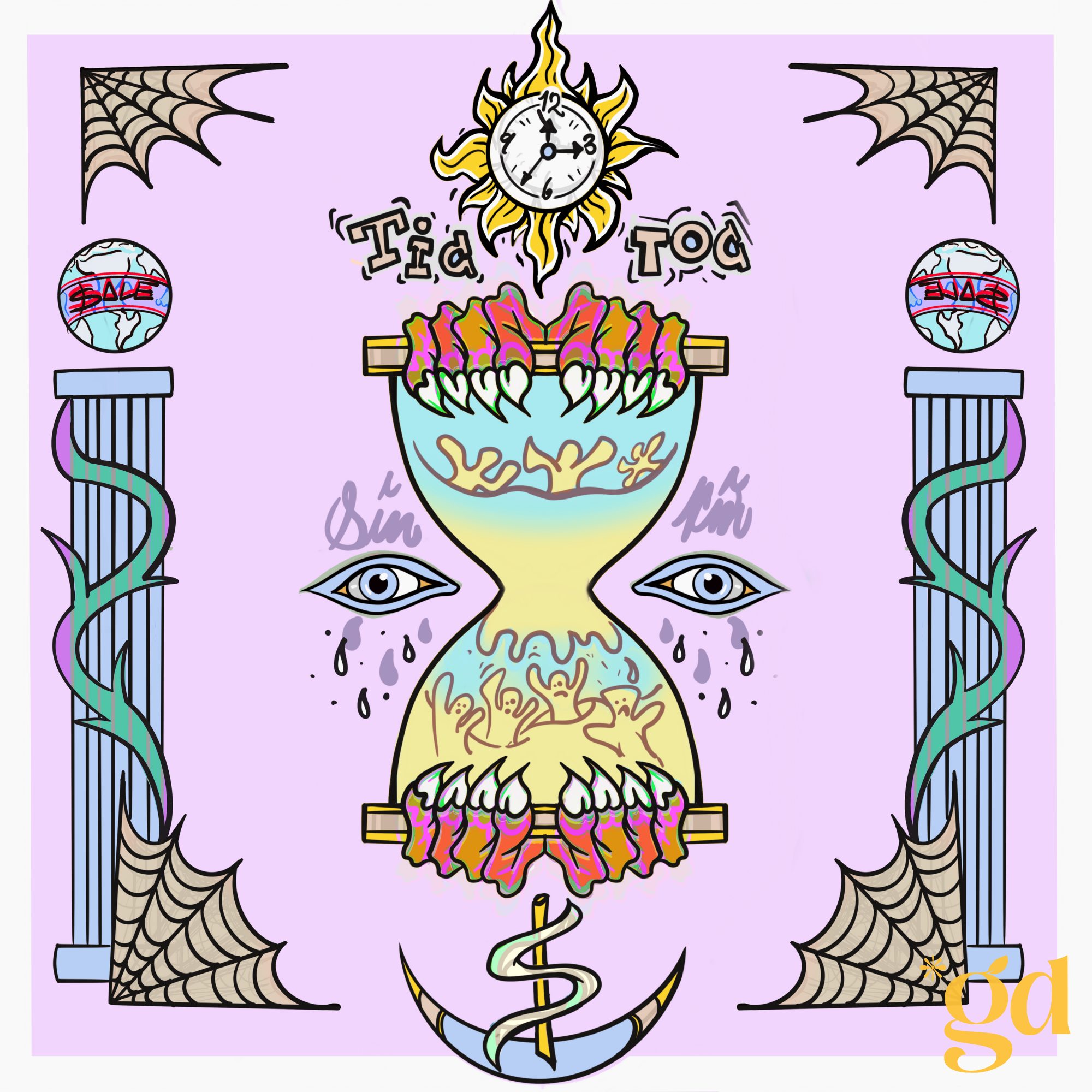
“Colonial time is about dominance and control — there to serve the imperialistic, hetero-normative constructs of living in modern times. [...] Indigenous time is really about being in relationship with...”
What have been the impacts of colonial time on individual well-being and community dynamics? What does it mean to reclaim the state of flow as a birthright? And how can rethinking our perceptions of time enable us to experience life with deeper attunement, responsiveness, and senses of aliveness?
In this episode, Green Dreamer’s kaméa is joined by Ixchel Lunar, an Indigenous-Time Ecologist and medicine guide, who guides us to explore the challenges of burnout in a fast-paced world and the historical context of how colonialism has shaped our perception of time.
Join us as we unravel the historical, biocultural layers of decolonial time, and ask ourselves: In such heavy times often demarcated by urgency, purpose, and overwhelm, what can we learn from slowing down and quieting our minds, honoring space for play and pleasure?
We invite you to…
tune in and subscribe to Green Dreamer via any podcast app;
tap into our bonus extended and video version of this conversation on Patreon here;
and read highlights from these conversations via Kaméa’s newsletter here.
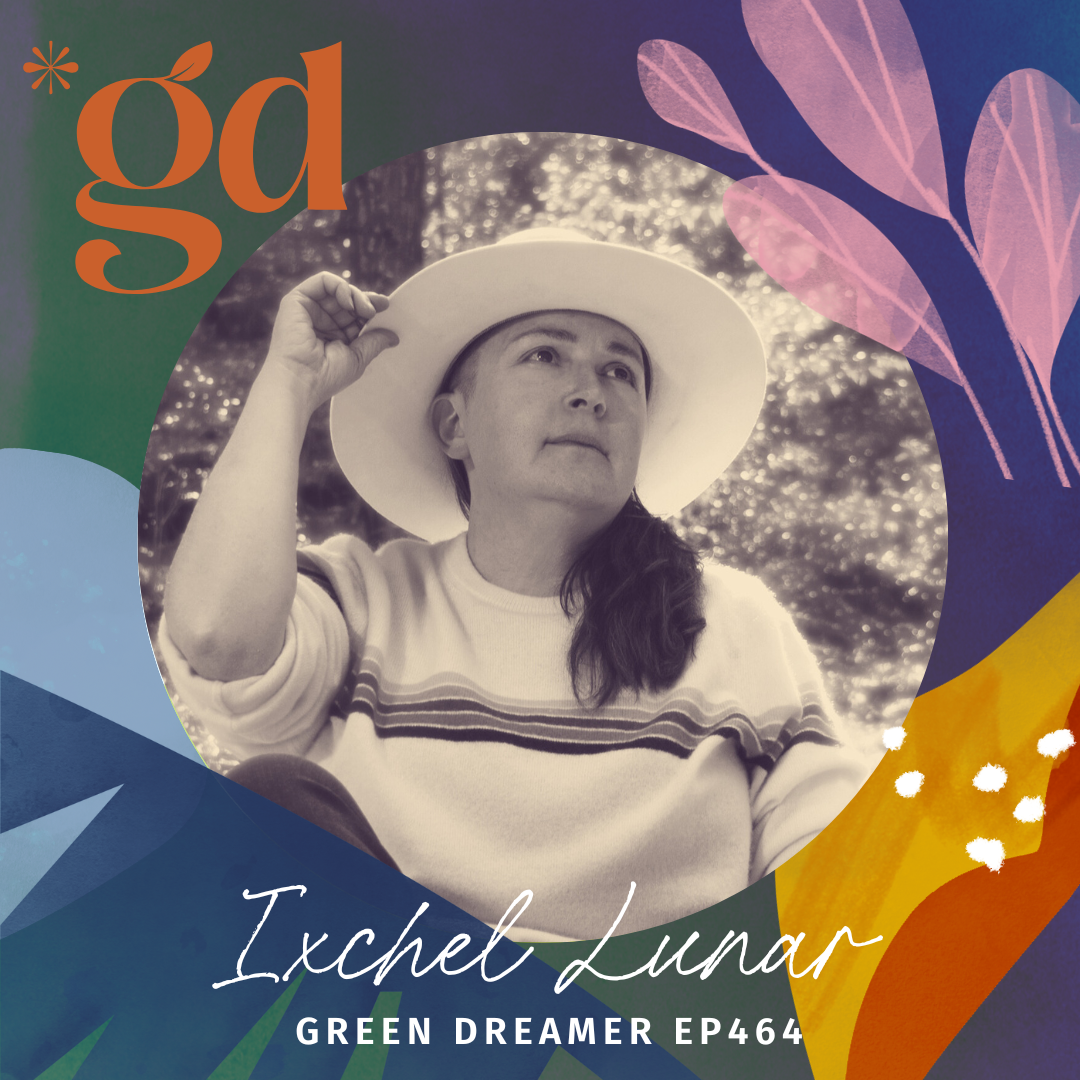
About our guest:
Ixchel Lunar (they/them) is an Indigenous Time Ecologist and ancestral medicine guide. A neuroemergent, queer, trans elder and former vice-mayor, they’ve spent 25+ years guiding visionary misfits through collapse, ritual, and reclamation. Their trauma-aware, culturally rooted approach helps people move through creative burnout and cultural disconnection by returning to ancestral reverence, relational ritual, and cyclical spiral Time.
Artistic credits:
Episode artwork: Malo Farfán
Song features:
Dive deeper:
To engage with this discussion through a guided practice, check out “A relational connection with time and the Earth” led by Ixchel here
Learn more about Ixchel’s work and find offerings on decolonizing time
Discover more about the Mayan calendar and the Nawales
Watch “The Racial Politics of Time,” a TED talk by Dr. Brittney Cooper
Check out this interview on Indigenous perspectives of deep time with Tyson Yunkaporta
Learn more about Estelle Ellison’s work
The Scent of Time: A Philosophical Essay on the Art of Lingering, a book by Byung-Chul Han
Stolen Focus: Why You Can't Pay Attention—and How to Think Deeply Again, a book by Johann Hari
Flow: The Psychology of Optimal Experience, a book by Mihaly Csikszentmihalyi
Discover more about Joanna Macy’s work
Read Emergence Magazine Vol. 5, Time
Learn more about Gloria Anzaldúa and the concept of nepantla
Expand your lenses:
Independent media is more important than ever! Please consider joining our Patreon or making a one-time donation today.
interview transcript
Disclaimer: Please note that Green Dreamer’s interviews are minimally edited (both audio and non-verbatim transcript) for clarity and brevity only. All statements should be understood as commentary based on publicly available information, and the views expressed in this interview are those of the guest and host only and do not necessarily reflect the views of Green Dreamer.
While we have made reasonable effort in our interview research and production process to ensure accuracy, we do not present our commentary as factual assertion and we are unable to guarantee the completeness or correctness of every piece of information shared. As such, we invite you to view our publications as references and starting points to dive more deeply into each topic and thread explored. Thank you for adventuring with us.
Kaméa Chayne: This is Green Dreamer, and I’m your host, Kaméa Chayne. I’m so excited to share with you this conversation featuring Indigenous-time ecologist and medicine guide Ixchel Lunar — all about decolonial time and reclaiming our states of flow as a birthright. We dance through questions like how colonial-capitalism has shaped our perceptions of and relationship to time, and we land by asking:
In such heavy times often marked by urgency, purpose, and overwhelm, what can we learn from slowing down and quieting our minds, honoring space for play and pleasure?
I don’t know about you, but as someone who really struggles with time management, I honestly quite needed this conversation for myself but there are so many gems to take away and i hope you find them supportive to your context as well. Also, Ixchel actually provided a guided practice to accompany this discussion. So if you’re curious to engage with this embodied decolonial time practice, you can come over to our Patreon at patreon.com/greendreamer.
This practice is free to download, AND ALSO, we would so greatly appreciate having your direct support during this giving season on Patreon or on Substack. And you can find all the ways you can support our work at greendreamer.com/support. For now, thank you so much for joining us today. I welcome you to take a few deep breaths if that feels supportive for grounding you in this moment with us here. And i hope you enjoy this episode!
[Conversation starts]
So, a lot of people don't really ever get the opportunity to really question or rethink our relationship with time, when it's all that somebody has known their whole life. So I'd love to begin by inviting you to share about that turning point for you when you had the space and setting to feel validated in going down these curiosities.
So how did you become interested in questioning your relationship with time?
Ixchel Lunar: Yeah, it's such a good one because it's been, I think, really ever-present for me, being neuroemergent, neurodiverse, however you wanna frame that. My growing up was challenged. I do identify as AuDHD, or autistic with some ADHD tendencies. And really looking back, I could see how I was very challenged to sort of merge with the world.
When I was very little, it was quite challenging. I didn't do well in preschool. And so, my grandmother…both my parents were entrepreneurs and working beyond full-time, very much workaholics. And so, my grandmother, my abuelita, Bea, really did a lot of that tending and care for me when trying to find childcare was just not an option.
And it was in that space with her that I really felt flow without understanding what it was then. But over time, really understanding that flow existed quite a lot in my family. And I thought it was just something everybody had. But then, when it was time to, like, go into the institutions, go to school, and things like that, I was bumping up against a lot of requirements and a lot of time constraints.
And so that's where I really started to feel those restrictions of time in the more institutional sense of, like, catching the bus and being at school on time, and being there for a certain amount of time. And when classes started, moving around, going to and from class. And all those things were quite challenging. And so in that sense, I really felt it. But I also really noticed this sense of flow with my family and the kinds of activities that we did together. That was really meaningful and felt really good in terms of my relationship with time as I was growing up.
And then as I got older, it was really this sort of push-pull around having to show up at particular times and do all of the things that needed to be done. Childcaring, with my two little ones as a single parent, and all those things that were quite challenging. And also the structures were helpful to be able to do those things.
But when I moved to Nicaragua in 2017 was when I really started to see the difference of how time is experienced in the United States versus outside the United States. And that was really eye-opening because I felt very at home in the pace of tropical life. But a lot of the folks that were immigrants from the United States had a lot of issues with it that were very verbalized. That reminded me of what it was like to try to fit into that particular pace in the United States compared to this more sort of relaxed, flowing time.
Kaméa Chayne: Yeah, thank you for this introduction. I'm sure we'll get to learn a lot more about your experience throughout the rest of our conversation. But I think the idea of rethinking our relationship to time is huge because it literally has implications for all areas of our lives, and societal functioning, and community, and how we relate to the land, and work.
And I'm also curious to chat with you, kind of, for selfish reasons, because I really do struggle with my relationship with time, and never feeling like I have enough time for everything I need and want to do. And then also finding it hard to kind of balance staying structured according to the hours that I try to allocate for certain tasks, while also wanting to be fully present with this living dynamic world, my plants, my animals, my shifting local water cycles. 'Cause I'm on rainwater catchments. So that's really important to me.
So I just find it a relief to engage with your work, to know that there's a home for understanding this sort of tension that I feel with time management. And I think at this point I just wonder how you would start to pinpoint what colonial time refers to and means as it relates to some of these challenges that we, and I think a lot of people who live in dominant Western cultures, feel today.
Ixchel Lunar: Absolutely. Yeah. So I really started to see that experience of colonial time when I eventually moved to Oaxaca. The locals would call it god time versus government time, and that was a huge, eye-opening experience to have it really be named. Because when I got to Oaxaca, people were saying, well, you know, you have to know which time you're in, in order to have things happen.
So if you're having the gardener come over or you know the housekeeper's going to come or you're getting a pipe fixed with the plumber, you always wanna ask if they're on god time or government time. And I was like, really? It was such an odd thing. And at that time, they were still doing daylight savings time as well. And so there was definitely this shift in terms of that hour at certain times of the year going backward or forward. But it was really this difference in the ways of being around time itself. That, god time is much more, I'll get there when I get there. I do intend to be there today.
But in Spanish, “hoy” can mean different things. It can be now, but there's different words for, like, right now versus today or in a little while. And they're very squishy. They're not completely…like 10 o'clock doesn't mean 10 o'clock, for instance. And so, noticing the difference of how we really approach time in that respect of, like, the more institutionalized ways of time imposing on us, has been an exploration, I would say probably over the last six, seven years or so, of like really starting to detangle time in these more flowy ways, and time in the more government sort of constructs.
And one of the things that I did was to really start to notice what colonial time is versus decolonized time. Which was what I was really interested in helping people to start to untangle for themselves, given how much it's impacted us, our nervous systems, and our ability to really exist in all of this, I would say, increasing polycrisis that we have been in. I mean, I say polycrisis, but it's really, there's so much more that's happening now than, say, 40 or 50 years ago, right? And people don't always realize the increase of everything that's going on. We tend to lose that.
And so, really, colonial time as it differentiates from relational time, which is what I think of as decolonized time, Indigenous time, spiral time, cyclical time, these are all kinds of names for what isn't colonial time, it is really the difference in relationship. So, one, colonial time is meant to dominate and control, manage, time management. All of it is about dominance and control. It's there to serve the imperialistic, heteronormative constructs of living in modern times.
Kaméa Chayne: Efficiency comes up a lot, right?
Ixchel Lunar: Oh, yeah. Yes. Yeah. And relational, or spiral, Indigenous time is really about that being in relationship with, and negotiating that, in relationship with.
Much of the ways that I like to approach the more decolonized ways of being come from the Mayan traditions around the calendar. So the Mayan calendar, the Cholq'ij, or the Tzolkin are terms that are used for that calendar in the round, which is a cyclical type of calendar. And their description of time comes from thousands of years of observation. Of really just connecting with the land where they were to understand what was happening around them and noticing the cycles of that.
And so they broke it up into 20 Nawales or characterizations, descriptions of time, and then 13 tones. And those are, like, energetics from low key vibration to like really intense vibration. And then when you combine that, then you get 260 days and that just repeats over and over and over again.
And the descriptions of those 20 Nawales, those characters of time, if you've ever seen the Mayan calendar, there's a human in the center with the Nawales on their back. And it's really that description of time itself as an entity. And so it's a very different way of relating with time because it's very much hyperlocal. It's a description of what's happening, the energetics of what's happening around us in terms of time.
And it really helps to be able to start to understand the energetics of where you are and what's happening around you, to be able to then start to relate with time rather than like trying to work against it. And understanding that, like, today time may operate differently than tomorrow. And for anyone who studies or follows astrology, there's also, like, planetary relationships and things that may be influencing our experience of Earth and the days. And so that can make sense in terms of that as well.
But with the geo-cosmo vision of the Mayan calendar, it's very much hyperlocal. It's happening around you. And you notice the signs when you're paying attention and the things that are happening around you. So it's very relational, very cyclical, and yeah. So, god time in a lot of ways. Mexico has the same kinds of traditions around time and calendar observation, and things like that. They're kind of kin, they're cousins in a lot of ways with the Mayans.
Kaméa Chayne: Yeah. I'm aware that different cultures around the globe have different calendars that they've developed. And so maybe that's also a reflection of how time is place-based, and not necessarily this thing that can be universalized. And we’ll, of course, go more into the implications of the structured colonial time becoming so dominant.
But yeah, I think on the one hand people might say like, oh, this became universalized because this is the most scientific, or whatever. So how would you address a question like that?
Ixchel Lunar: Yeah, I really refer to time as hyperlocal in the sense that, in the other Indigenous traditions that I've looked at as well, they also will describe time in a very land-based and/or sky-based way, in terms of where they are located on the planet. And it's very much, there's no separation really of those things. And so, when I work with people as well, it's, like, really wanting them to be able to connect with the land around them as a way to start to notice and observe what's happening.
Permaculture is the same kind of way. That zone-zero of spending a year watching the land in order to really get a sense of what's happening with the land. So then you work with the land to be able to grow things and whatnot. I think it borrows a lot from Indigenous, Traditional Ecological Knowledge and Indigenous wisdom. So, I think there's really something to that in terms of being able to understand and start to suss out time.
And it's unfortunate that many of those traditions and calendars have been lost or put away or forgotten and not tended. And hopefully, as we are in this project of decolonizing, and, you know, the polycrisis, and the things that are coming, maybe those ways of knowing can come back and support people where they're living.
Kaméa Chayne: I think maybe an important reminder is that the Earth is constantly shifting and is dynamic. So that would be a big problem when the intention is to try to control and universalize.
I forget what the exact report was, but I remember reading recently that, like, scientists are finding that something is shifting. And so every year we're gonna lose one second, and it's gonna throw a wrench into the system because it just messes everything up. And I'm like, well, the Earth is constantly shifting. And I think maybe there's a lot to be said there in terms of our need to be more present with the dynamism of everything and of life.
So returning to that hyperlocal, land-based sense of time is very important in that sense.
Ixchel Lunar: Yeah, one of the types of colonial time that I talk about is divided and perfected time. So it's that 24/7 clock time and that 365-day plus leap year calendar of the Gregorian calendar. And how, even atomic time is, like, everyone is trying to scientifically find that perfect amount of time.
And the Earth is like, nope. We are dynamically in this orbit with this crazy magnetic force going around the sun, which is going around the galaxy. We're not in a perfect universe. We're in a dynamic universe. And so to be able to, like, really nail down what time is from a scientific lens, I think it's an ever-moving target in terms of that.
I think it's hysterical. I've heard it's going to slow down and speed up so many times since I've read the newspapers, like, it's ironic. It's really funny the way that they're just trying to get it exactly perfect, which is, of course, white supremacy culture.
[musical intermission]
Kaméa Chayne: Yeah. When you were saying earlier that, in different places, 10 o'clock doesn't necessarily mean 10 o'clock, depending on the ways that people are relating to time, it makes me wonder about the respectability around being on time. 'Cause I think in the dominant culture it's like, okay, we scheduled a call at 10 and the person is 15 minutes late. And if that's the case, then you're disrespecting my time.
So it makes me wonder about, I think the answer is yes, but whether respectability is also something that is culturally and subjectively shaped in a sense. And then also what respect would mean in places where there is a looser and more relational way of looking at time.
Ixchel Lunar: Yeah, I mean, definitely going back to my days in Nicaragua and the jungle, and seeing, mostly white folks get really frustrated and vocal about that respectability of time that, like, they said, 10 o'clock and now it's 11:30. And you're just showing up, and we had this date and time set. Or today didn't work, and they didn't come at all.
And so it's interesting to sort of juxtapose that with what I'm really exploring these days is the concept of progress and acceleration of time. Like we all feel that acceleration of time, and it seems to be very much connected to progress, that there's certain things that need to be done each day and every day in order to maintain progress, and achieve progress.
And these things are very much tied to money as well. So time and money go interchangeably. Time equals money in a lot of cases, in the colonial time construct. And so there's that real connection between my time is money. And so respecting my time is very important to my wallet, right? Like, if you disrespect my time, then I'm somehow losing money. So there's a bit of a scarcity thing that's involved in that as well that I find interesting. But yeah, the whole colonial project is, really, very deeply tied to progress.
And there are several ways that I've sort of outlined time in the colonial sense. Stolen, which is a beautiful framework that comes from Dr. Brittney Cooper. And she has a TED Talk called “The Racial Politics of Time.” Yeah. So it's really about how time has been stolen from Black and Brown people. That Black and Brown people are not within the histories of things, and that their lives are still constructed in ways that time is taken from them. And so Afrofuturism is that way of exploring how to reclaim time.
And it’s a very beautiful way of looking at that divided and perfected, commodified. So really, that's where we saw that separation of people from the land. So, going back prior to maybe the colonial project in the Americas, 500 plus years ago, even in European times, there was that separation between people and the land. That land became owned, and that people had to sort of make work in order to survive on the land.
And that carried forth into the Americas. And the importance of that is separating people from the land. If you have land, if you're connected with the land, you are gathering and harvesting, growing food, and have access to food. You don't need to wage work. You don't need to sell your time in order to subside, to have subsistence.
And so, there's a real deep need to keep people separated from the land, which is why decolonial work of any kind, really at its root, is about the Land Back movement. About reconnecting people to the land and not putting ownership on the land as a way to help people to be able to exist, and not have to wage work, and that sort of thing.
Some of the other things are gender-extracted time. It's the way that women and marginalized genders have different requirements of their time compared to men, and generally white men, is what we're talking about in a lot of the cases as well. Caring for children and the elderly, emotional labor, all of those kinds of labor that are very gender-extracted.
And then, there's something that I love that comes from one of your guests, Tyson Yunkaporta, where he talks about outsourced time. And that's really about the way that we have been, extracting from the planet, creating greater entropy. So we're burning time, basically, which is literally reducing the amount of time that the planet has to exist. 'Cause when we change matter from one to another, and we're burning that time that the planet has, we're reducing the life of the planet itself.
Estelle Ellison talks about foreclosed, or fascist foreclosed, time, which I think gets to a lot of the experience that we have these days around time scarcity. That we are really feeling that acceleration. And there are so many limitations that have been put on our lives that are taking time from us in so many different ways, whether it's the time you stand in the DMV line to being jailed for being homeless, right? These are all the different kinds of ways that fascism is stealing our time
And then a more recent one that I have been playing with comes from Byung-Chul Han, who is a German philosopher born in South Korea. He's written about time in a lot of different ways. He talks about the desynchronization of time, and about time as scent and lingering.
And so this doom scrolling and all of the different ways that we're sort of dissociated from time and from our own surroundings through our devices and through all the requirements of work and things like that, it's disconnected us from the rhythms and the cycles of life. And I think that's a really important one, in terms of having it really connect to that time scarcity that we're feeling.
His suggestion is that if we start to do things with duration, we give them our presence and we linger in those moments. That's where we can start to really reconnect with time. I've read a lot of books on time, and he's the only author that I have read that really starts to get at the crux of that relationship with time. And so I'm very curious about his work.
Kaméa Chayne: Yeah. It also reminds me of Johann Hari's Stolen Focus. So, it's a little bit different 'cause it's focused on the attention economy and focus, but it is very much related in terms of how our attention is being stolen and all these distractions that are constantly fighting for our attention and, therefore, time as well.
And I'm also thinking about the unequal exchange, which is just that, like, somebody in a so-called developing country, might have to work, like, 30 days to earn enough money to be able to take the same vacation, or buy the iPhone, as somebody in a so-called developed country, where, because of the currency difference and the exchange rates, somebody might work like two days, or a week, and be able to do the same thing.
So that is like a continual extractive process, which is why I also critique companies that will say, like, we are supporting regenerative farming in India because we work with this farm that is doing everything regeneratively. But I'm like, socially speaking, you are still taking advantage of this unequal exchange that is monodirectional, and therefore, there is still sort of an extractive dynamic there, even though you are paying living wages and all that stuff. So that's a whole other conversation, and there's a lot more there.
But maybe something that is more relatable for a lot of us is this idea of flow or being in a state of flow. 'Cause I think most people have, to some degree, experienced some activity in which they find themselves in that flow state. And I love when you powerfully say that flow is a birthright. And you talk about how the dominant culture has stolen flow. So, can you elaborate on what flow really refers to and how it relates to colonial time and productivity?
Ixchel Lunar: Yeah. I first heard of flow in grad school in the early nineties. A book came out by Mihaly Csikszentmihalyi called Flow. And it was describing all of the experiences that I had growing up. Like, my dad was into extreme sports, and we did ballooning, for instance. And so, we would either chase his balloon or get to go up in the balloon and have that experience. Camping, sewing for hours with my abuelita. There were all these things, the fiestas and things like that, that were all very flowy. I didn't have words for what that was. But when I read that book, I was like, this is what's been happening in my life. And so I was very interested in that.
And then what I noticed is that over time, the concept of flow got hijacked. It got hijacked by corporations, basically, as a way to dial up productivity. Learning and understanding how people could get into flow could get them to be more productive in the work that they were doing, as a way to further extract our time from us as humans. Too much flow can lead to burnout as well. Hyperfocus and flow are neurochemically depletive in terms of the experience itself. And there are a lot of neurochemicals that are required to be able to get into flow.
And so when I started to really study flow and to understand the neurochemistry and the neuroscience behind it, what I noticed was a lot of these sort of more extractive frameworks around what flow is, how to get into it, how to maintain it, and how to recover from it. And one of the things that I noticed was that they always describe the flow cycle starting with the struggle phase. Which is a phase of really turning your attention to the thing that you're doing. Then the neurochemistry starts to support that focus, and then you drop it into flow. And there's a relaxation point that occurs in between those two phases. And then you flow for however many minutes. I always say 90 minutes to two hours max, to really support yourself. And then you go into this recovery phase.
But when I was working with my clients, what I noticed and what I realized was all of colonial time construct is working against them in terms of that recovery never being achieved. That we are constantly under-recovered. We’re struggling just to maintain on a day-to-day basis. And so, sitting down to get into flow for whatever purpose it was, creativity, the folks were never really restored or rested. And so, I always like to sort of move back that we can't really do flow unless we are rested.
And rest is also very, I would say, in this imperialistic structure, rest is a very individual thing. But what I have noticed and what I've learned about the neurochemistry is that the best kind of rest that we have is relational rest. And so, I always encourage folks, if you wanna get into flow, really start to address your relationships.
So those can be plants, pets, place, and people. And so doing activities that are related to relational activities with other beings is how we are regenerating ourselves. It's not like, go and take a nap, or go scroll on your phone. Those are not really the best kinds of rest in terms of relational recovery.
And then once you start doing that, then you're able to be more neurochemically available for flow to come to. And flow, I also really tend to think of as more of a relationship with our surroundings and our environment than, like, this sort of neurosciencey thing that you can do if you do X, Y, z, check off the boxes.
Kaméa Chayne: So, is there a difference between the flow in the way that you talk about and this idea of mindfulness and just being present in this particular moment? So how would you sort of distinguish that?
Ixchel Lunar: Yeah, so mindfulness is definitely, I would say, a precursor to flow. So mindfulness, gratitude, and movement are three pieces of those precursors that I think are, like, everyone needs to do those three things. You can do lots of other things, but if you do those three things, then flow will arrive.
We can't ever really force flow. It either arrives or it doesn't. And so, you know, I like to treat it as a relationship. And mindfulness is just a way of starting to become present with the moments that are passing, right? And so, different in that flow seems to have some real neurochemical and neurobiological signatures to it, around where our prefrontal cortex starts to quiet and slow down. Which means the I, I, I story that we have going gets quiet so that we can actually start to merge with what Joanna Macy calls the inter-being or interconnectedness.
And flow is very much, I would say, a precursor to that state of interconnectedness because that sense of self dies down, and we're able to, like, really connect with the world around us, or the activity that we are doing, in a very deep-time kind of way.
Kaméa Chayne: Yeah, I was gonna ask what flow does for us. And maybe it's kind of intuitive, but is it understood to, as you say, support our ability to connect more deeply with whatever we're doing, and also with the more-than-human world, the living world? Maybe, like, deepening our intimacy with the moment, deepening our intimacy with the world?
Ixchel Lunar: Absolutely. Yeah. There are so many amazing neurochemicals that come forward when we're starting to get into flow. There's norepinephrine and adrenaline, which, you know, those can feel good in some cases. There's the nitric oxide, which is also a precursor for some of the other neurochemicals that come on. Nitric oxide helps us to relax, and it's very vital for many different functions.
And then, once we're in flow, there are several that start to kick in as well. And then at the end of flow, the ones that are, like, sort of that feel-good moment of having been in flow, come about in that relational recovery aspect. That's where we're actually really embodying the flow state itself in terms of the oxytocin and serotonin.
So, we know those to be, like, pretty feel-good chemicals, right? They really help us to feel good about where we are and what we're doing, and, of course, to deepen that intimacy that you talked about. Absolutely. Yeah.
//musical intermission//
Kaméa Chayne: Yeah. This is a little bit of a tangent, but I get really sad thinking about my dogs’ lifespan and that they're probably only gonna live about 12 to 15 years. And then I also think about how some insects only live for 24 hours. Or, like, the Amazon Rainforest is 55 million years old. So on the one hand, I'm like, my dogs are living such a good life. They don't have to worry about food. They get to play and run around all day, chase pheasants and lizards. And maybe they get to experience a lot more flow because the concept of hours and minutes and seconds don't interrupt, the very raw way of engaging with the world and getting to tune into their body's time, and the time of the world of, like, their tiredness, their playfulness, or whatever it is. So there's that.
And it also leads me to a sort of personal frustration I have with dominant cultures that are really obsessed with longevity. And kind of suggesting that cultures with higher average lifespans are somehow superior and more advanced than cultures with shorter lifespans. So let's see what they eat, or how they live, and extract, kind of, bits and pieces that we can turn into products to sell to people to try to consume, or at least have these suggestions of things that individuals can do to maximize their longevity.
And I think this is definitely like a yes/and, as in, of course, most of us wanna make the most of our lives. And we also need to really challenge disparities that are based on systemic oppression, like lack of access to healthcare, or chronic stress, and stolen time, as you talk about as well. And at the same time, I think that sort of reduction of time into this universally quantified measurement just misses out on so much, because, like, why is maximizing this absolute number of years the ultimate goal and not like our depth of intimacy in how we live with and experience the world, or how advanced our communities are in, like, our support systems to be able to improve everybody's relationships and quality of life.
And yeah, just recognizing that it is very possible that someone who's 60 has had a much deeper experience of life than somebody who's 100. Or another person who, maybe, is more able-bodied and has been able to do a lot more, quote unquote, productive things for the system, actually having had less depth of access to experiencing life than somebody with a disability or who's neurodivergent who had been able to tap into, like, a different and nonconforming way of relating to the world. So I don't really have a specific question here, but I'd just be curious what else you would like to add to this.
Ixchel Lunar: Mm. I love all of that. And yeah, I mean, we can definitely be in flow with our dogs for sure. Group flow is another kind of flow where we're in flow with other people or with the more-than-humans. And, so I love those places of flow as well. So I just wanna nod to that. And also, I have a Xoloitzcuintli, and they are supposed to live ‘til like 25. And I was shocked when I learned that, 'cause I didn't know. But yeah, my dogs are very much a central part of my life.
And then, yeah, I think there's like the quantification of time, and the meaning of that, that I think is really interesting to explore. To be able to, I think, make the most of every day that we have is really important to me, versus how long I will get to live. I used to really want to live to be 120. I'm not sure if I want that anymore. I just really want quality, and not necessarily quantity of time. It's more the Kairos versus the Chronos.
Kaméa Chayne: Yeah. And we can't necessarily control or know how long we're gonna live anyway, so we should be trying to maximize our day-to-day. 'Cause that's what, not that we wanna control it, but, like, we can live more intentionally in that way.
Ixchel Lunar: Absolutely.
Kaméa Chayne: Yeah. So I wanna backtrack a little bit to go to the history side of things because this dominant way of looking at time as universal and rigidly structured wasn’t always this dominant and prevalent. So, what do we need to know about the history of how this one way of conceptualizing time has taken over? And how does it relate to other historical events like colonization, capitalism, and, yeah, like how have these reshaped not just the social structures of the world, but also our relationship with time?
Ixchel Lunar: Yeah. It's so controlled. I would say that the whole colonial time project is so deeply intertwined with the imperialistic, capitalistic, heteronormative project. And there are more descriptors I could put on that. But to be able to, I think, pinpoint where we really went awry historically, I would say comes down to, probably, the creation of capital. Which is something I know Tyson has brought up recently as well. And I was like, you've got it.
Because time is so deeply entwined with money, and it's so ingrained in us to think of those two things as inseparable, there is a disentangling that has to happen in order to really be able to start to have a more relational experience with time. Because so much of the way that life is maintained and created has to do with the work week, right? It has to do with production, the means of production, as a way to create more capital. And, you know, we see this with the way that the policies are shifting in the United States with billionaires in control. People who have so much access to money that we can't even imagine how much money it is that's been extracted from humans and from the planet, right?
They have those colonial time constructs down to a science, and the whole system is designed and predicated on that. And so to really be able to start to separate that even from our own creative means, as a way to start to deconstruct that connection between time and money, I think, is really a valuable way to resist colonial time.
'Cause when we can be creative just for the endeavor of it and not for the monetization of it, we can really get into those flow states that are so enlivening and meaningful. And so, I would say, I would just put that out to your listeners as a challenge, to really be able to play with their creativity in whatever ways that means for them, as a way to sort of disengage from the colonial time project.
Kaméa Chayne: Yeah, I think there's also something to be explored, slash said, about how a lot of people, when we start out doing something for the pure enjoyment of it, so maybe it's painting or whatever, and then we start being like, hmm, maybe I can sell this painting and make it like a side hustle. And then we start doing it as a side hustle and trying to think about how we can capitalize off of this. It then starts to take a lot of the actual enjoyment out of that thing. 'Cause then it starts to feel like a chore, and this thing that is tied to something bigger than my simple enjoyment of it.
So I don't know what else you might have thought through on that front, but I think it's hard in this world where people do have to make money in order to pay the bills, and people wanna try to connect that with things that they're already passionate about, that they enjoy doing as much as possible.
So, you know, we do more of those things and then think about how we can make money off of those things. And then it takes us in a path that we necessarily didn't expect. So, I think that's maybe a relatable struggle for a lot of people, too, is that relationship, and how the dynamic with our passions and hobbies change when we kind of insert this factor of how can we monetize it.
Ixchel Lunar: Yeah, it's so important because it really flattens the flow state and really sort of shifts our relationship with flow when we do that. And so I'm always trying to get folks to just play with something that they enjoy just for the pure enjoyment of it and not for the monetization of it, or the productivity of it, or that sort of thing.
I think it's a really good lesson that I learned from my oldest child when they were a teenager and they were doing art pants. They were, like, doing all these really beautiful drawings on their pants, on their jeans. And I thought it was so cool. And I was like, oh, you could, you could sell these, you could make these. And they were like, absolutely not. And totally, just rejected the idea outright. It was like, how could you even? And really caught myself in that of like, oh wow, you know how capitalistic.
Kaméa Chayne: Yeah, and I mean, I don't think this means to have us orient towards some ethical purity. 'Cause I think there are ways that people can kind of find the balance to make things work for them. So this is a very personal question in terms of how people make things work for themselves.
I think there's also the other side of the equation, which is something I struggle with, which is that I have a hard time finding time to do things for the pure sake of enjoyment, because there are so many horrible things happening in the world. If I'm not online, like, working on Green Dreamer, working on my newsletters or whatever, then I'm offline trying to grow food so I can, you know, share them out to community, food kitchen, whatever. And then I don't end up having time that is purely for me for the sake of enjoyment. And I love doing art. Every week I might assign, like, okay, Friday mornings I want for me to be able to do art. But then that time comes, I'm like, no, this thing is due tomorrow. This thing is due next week. So then I always end up scrapping that time.
So it's kind of like the opposite of monetization. But in this time of crisis, I think a lot of people are also feeling constantly overwhelmed, because it's like we can never do enough to address the world's crises. So how would you kind of approach this type of a struggle that isn't so much about monetizing, but just wanting for everything to feel like it has a purpose? That it's able to contribute to something bigger than myself. Which I think is mostly good, but then not good if I don't find that balance that could be more supportive for my overall well-being.
Ixchel Lunar: Yeah. We're no good to anybody if we're burnt out. Right. And so, I would say if you enjoy your garden, let that be a space for you to just enjoy your garden. And then if there's extra, wonderful, right? I always try to have some time for myself at the beginning of the day before everything else. Not everybody can do that unless they get up earlier than what they're typically doing in their day, which can be a challenge for some people to sort of restructure their evening so that they have more space in the morning. If you're a night owl, you can do it at night, too.
Sometimes, like when my kids were little, having quiet time at night was amazing. It was so nice once they went to bed to have some space. And so to be able to do that as well, if you have and can find space in the evening, to be able to do that. But really make it non-negotiable, because if it's non-negotiable, it has to happen first. Or at least at the very end, depending upon which way you stack your day.
Being able to do that is really that filling your own cup piece, because if we're not taking care of ourselves, then we're not gonna be any good to anybody else. But also, if there's a way that you can do it within community as well, go for it. Like, it doesn't necessarily have to be, like, just by yourself, spending time doing tai chi in the park, or yoga within a community, or something like that. If you can make the space to do something like that, it gets you into more of a group framework, depending upon, like, some people are more group-flow oriented versus individual flow. So, really getting a sense of that. Playing music with other people or with yourself, like playing an instrument, you know, those kinds of things.
And being able to sort of create little pockets for yourself throughout the day, to do those kinds of activities. So, I know people who love puzzles, for instance, and they've got a puzzle on their dining table that's, like, always in progress. And they'll just stop, like, maybe while they're making lunch, or something like that, and put a few pieces in, get into a little bit of flow, and then move on with their day.
Like, it doesn't have to be necessarily so structured. It can just be sort of in a meandering, kind of emergent way as well. But just to sort of start to notice your relationship with time throughout the day and your relationship with flow. Is it just extractive, or are you giving yourself some spaces to just be with flow and experience that in a relational way, or just on your own in some kind of creative way? That will help you to be able to embody that neurochemistry that I talked about in a way that is really regenerative and very supportive.
Kaméa Chayne: Yeah. Thank you. I'm gonna take all of this to heart. And I think this is very important because we wanna also be embodying these changes and not sort of replicate the crises in form, as Bayo Akomolafe says.
And as we start winding down our conversation, I'm thinking about my interview with Prentis Hemphill, where they talk about how the world needs us to get weird to shake up the status quo and all the things that have become normalized that don't serve us. And diversity in all forms tends to get suppressed when there's this one dominant thing that is being universalized, including colonial time.
So, I'm curious what you'd like to expand on in terms of how colonial time has been weaponized against neurodivergence and different multicultural practices and ways of living. And then also, how in this time of a big need for reclamation, that all of these things can be tapped into as sources of power.
Ixchel Lunar: Yeah, well, I will say that conformity that's so required of us to operate within the colonial project. And when you're neurodivergent or neurodiverse or neuroemergent, as I like to call it, there's a real bumping up against that. And also that, like, yeah, we are weird in a lot of ways.
And in order to really be able to be more in your weirdness, there's a requirement of like really dealing with the, I would say, how do I put it? Your regulation or dysregulation compared to the rest of the world. It takes a feeling of safety, I think, to be able to be authentic, to be in your weirdness. And when everything is constantly dysregulating oneself, then it's very difficult to feel safe to be who you are.
And so one of the things that I noticed was, being in this state of, like, hypervigilance and conformity when I was younger and dealing with CPTSD, and all of those things, and when I was able to start dealing with that dysregulation was when I could really step into who I was in a deeper way. The flip side of that is that when we do these things, the adrenaline that's been supporting immunosuppression and keeping us able to survive through all of these crises, it lowers. And when it lowers, that's when we get sick.
And so when I started doing that, that's when I started getting sicker. I have a lot of conditions. Pentad super syndrome. It's like a bunch of different things. Ehlers-Danlos syndrome. Many, many things. MCAS. Too many acronyms to describe. So the challenge with helping yourself to become regulated again is that lowering of adrenaline, which keeps us healthy for the crises. And then when we lose that adrenaline and we start to see these illnesses come forward, that's where the challenge is.
And so, just to be, like, really cautious about this work of de-adrenalizing the body can bring up all these things that have been suppressed and withheld within our bodies in the past. And so to really be tender and caring for yourself as you are going through this work of decolonizing, I think, is the most empathetic and humane thing that we can do for ourselves and our bodies.
//musical intermission//
Kaméa Chayne: What has been one of the most impactful books you've read lately, or publications you follow?
Ixchel Lunar: So, I would say the one that I've really spent a good time with recently is Time, which is volume five of Emergent Magazine’s printable series. So they're mostly online, but a few times a year, maybe, they do a printed version, or maybe it's once a year, I'm not sure.
But they have compiled several pieces on time that I think are really beautiful and definitely expansive in terms of the things that I've read about time. Some really poetic pieces and some prose that are really nice. So I would encourage that for folks.
Kaméa Chayne: What is a motto, mantra, or practice you engage with to stay grounded?
Ixchel Lunar: Yeah. Daily, when I am in my gratitude practice outside, when I am invoking all the beings and my ancestors, I always end with, sort of, a gratitude mantra, which is that I'm grateful for this time to be alive. It's important because we are so resourced, we have so many resources at our fingertips in this day and age, and yet we're facing so many crises at the same time.
And so just to remind myself that I'm born and I'm alive now, not 100 years ago, not 10,000 years ago. Right now, in this moment, I'm alive and I'm truly grateful for that.
Kaméa Chayne: And finally, what is one of your greatest sources of inspiration at the moment?
Ixchel Lunar: I would say being back in the tropical environment has been phenomenal. I loved the jungles of Nicaragua, and I miss it on a day-to-day basis. And I've lived in an arid environment in Mexico, in the Oaxacan Mountains. And then I lived in the highlands of Chiapas, and that was very cold, and it was beautiful pine forests.
But when I got to Veracruz, and the humidity increased, and you could hear the toucans, and the wrens, and all of the bird life that's here, it’s just fantastic. I'm just constantly listening to the soundscapes of the world around me and letting that inform, like, what the cycle is that's happening here right now. And so that's just been really alive for me.
Kaméa Chayne: Beautiful. Well, Ixchel, thank you so much. It's been such an honor to share this time together. And as we close off here, where can people go to further support your work, and what closing words of wisdom do you have for us as Green Dreamers?
Ixchel Lunar: Yeah, decolonizingtime.com is where you can find all the offerings. And I would say, you know, for folks that are doing this decolonial work, to really keep in mind that it's taken us 500 plus years to get to where we are with colonial time. And to be able to really move back to more cyclical ways of being, it's gonna take many, many generations.
And people really want to, like, do the thing now so that they can be decolonized. And I wanna say, no, we're really in a liminal generation, that nepantla generation that Gloria Anzaldúa talks about. Sort of edge-walking in this time. And so to really be able to, sort of, be okay with the liminality. That it's not an either/or way of being. That we are creating the future for our future generations to live in, and to be comfortable with that.
And it's not easy. But if we can start to really understand that we are in a liminal way, that will help us to sort of relax into this time, I think.