
Solaris J. Capehart: Turning toward one another amid times of crisis (Ep471)
“When we turn towards one another, when we take care of one another, things can change. People can change.”
How do we navigate questions around staying to resist, versus relocating to find home — in a time when certain places may no longer feel safe for certain bodies? What might it look like to push back against gentrification as a community? And how do we confront the complicity of our entanglement in systems of oppression, extraction, and displacement?
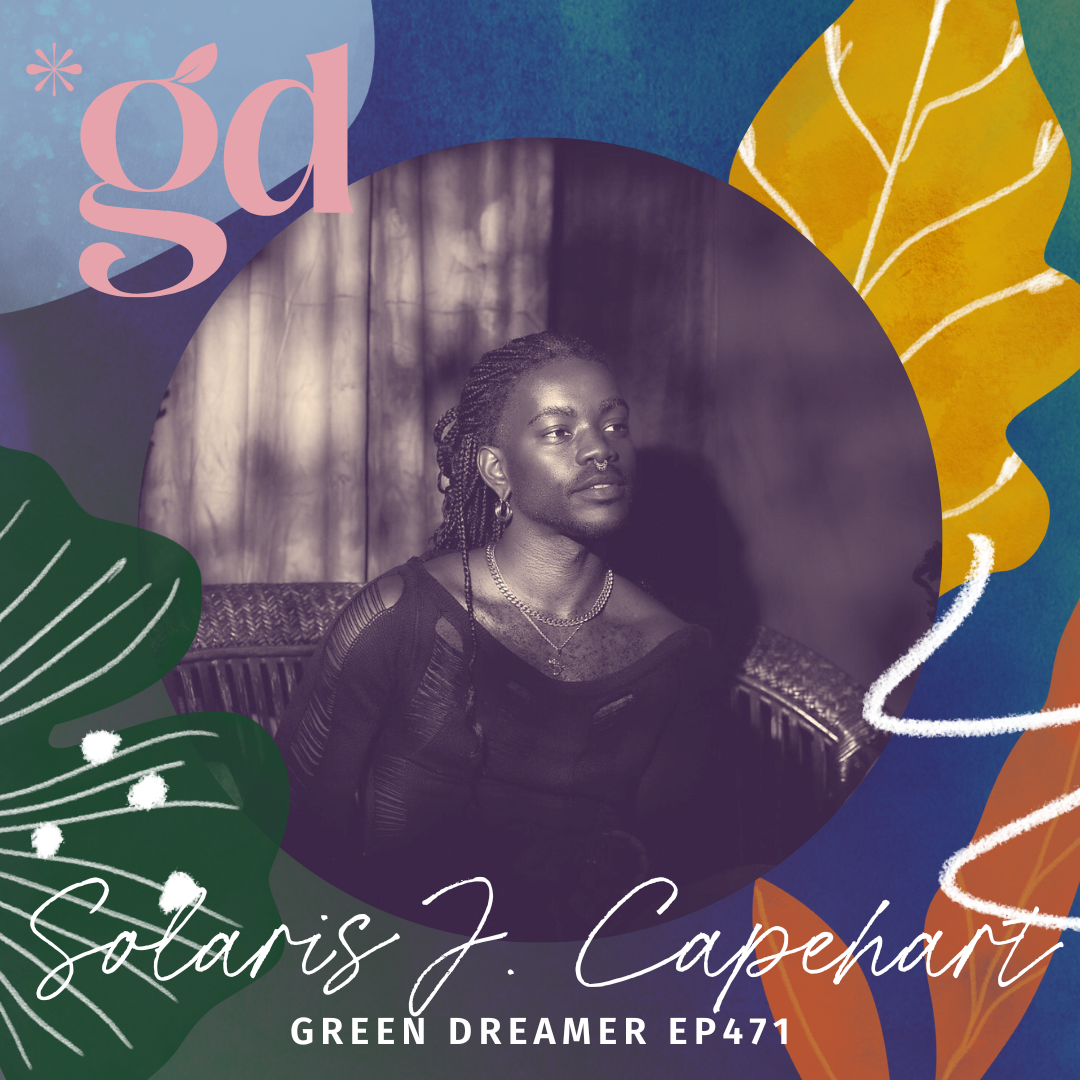
In this episode, Green Dreamer’s Kaméa Chayne speaks with Solaris J. Capehart, a Liberian poet who works alongside their neighbors to nurture The Garden Abolitionist Bookstore & Community Well.
Join us as we explore how gentrification is wrapped up in particular ideals of advancement and particular visions of quality of life that are not neutral; how we can continue showing up for ourselves and our communities during precarious times; and more.
We invite you to…
tune in and subscribe to Green Dreamer via any podcast app;
tap into our bonus extended and video version of this conversation on Patreon here;
and read highlights from these conversations via Kaméa’s newsletter here.
About our guest:
Solaris J. Capehart is a Liberian poet and educator based in Bed-Stuy. They work alongside their neighbors to nurture The Garden Abolitionist Bookstore; Community Well.
Artistic credits:
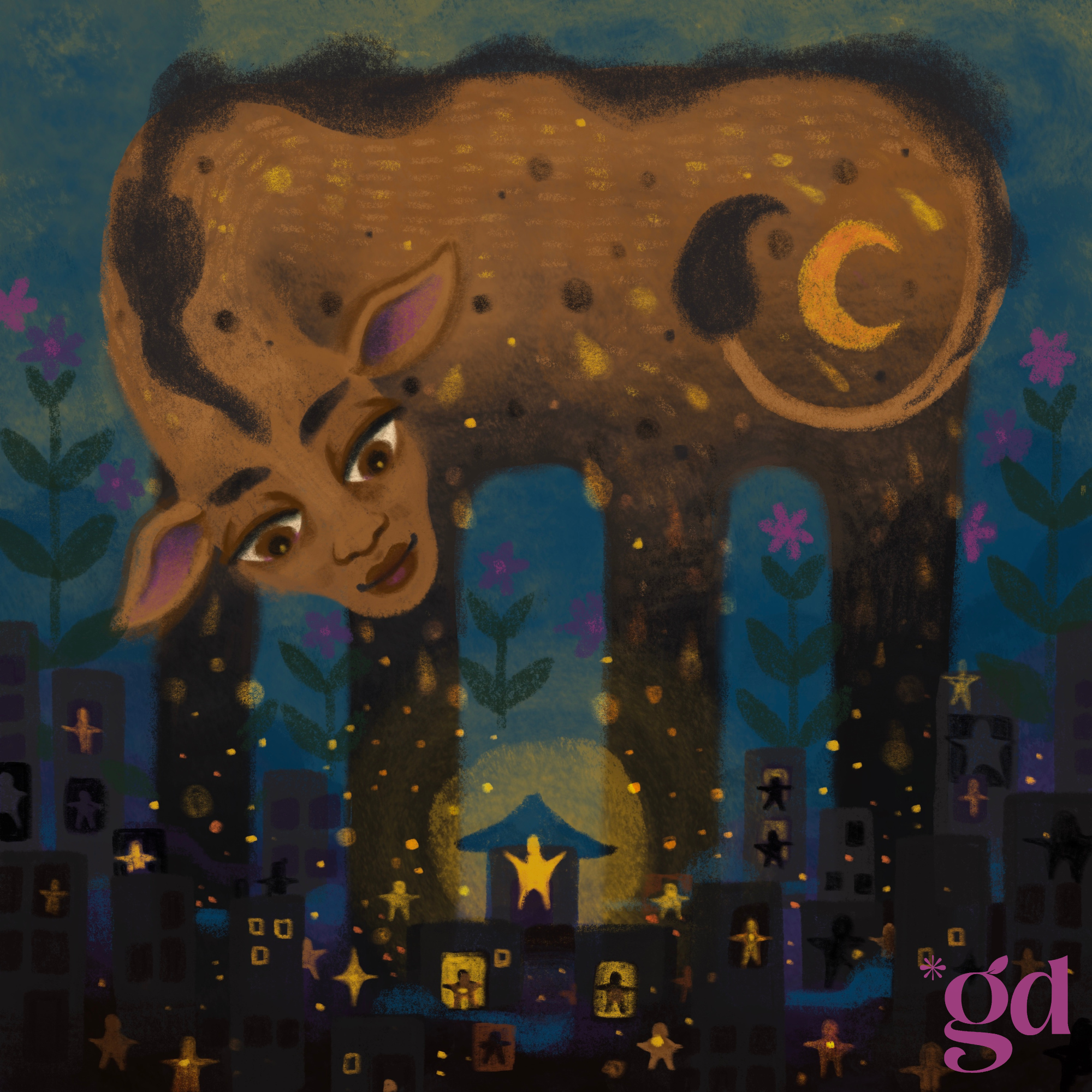
Episode artwork: art twink
Song feature: “I Am” ft. India Arie by Beautiful Chorus
Dive deeper:
Read more of Solaris’s writing and poetry here
Find out more about Solaris’s work with The Laundromat Project
Learn more about Ifá and Orisa Priestess, Trinice Ìyá Fábùnmí McNally, PhD
Find out more about Black Women Radicals
The Spirit of Intimacy, a book by Sobonfu Somé
Ours, a book by Phillip B. Williams
The Nation on No Map: Black Anarchism and Abolition, a book by William C. Anderson
Check out this poem by June Jordan
Expand your lenses:
Independent media is more important than ever! Please consider joining our Patreon or making a one-time donation today.

interview transcript
Disclaimer: Please note that Green Dreamer’s interviews are minimally edited (both audio and non-verbatim transcript) for clarity and brevity only. All statements should be understood as commentary based on publicly available information, and the views expressed in this interview are those of the guest and host only and do not necessarily reflect the views of Green Dreamer.
While we have made reasonable effort in our interview research and production process to ensure accuracy, we do not present our commentary as factual assertion and we are unable to guarantee the completeness or correctness of every piece of information shared. As such, we invite you to view our publications as references and starting points to dive more deeply into each topic and thread explored. Thank you for adventuring with us.
Kaméa Chayne: I want to start with this opening line that you wrote in one of your Substack essays, which reads, quote, "I like to imagine that our spirits chose this era to be born in for a reason. And part of our work in this life is to remember why," end quote.
I felt stirred and kind of tickled by this because I'm used to hearing the sentiment where people who feel conflicted in these times or who maybe feel outcasted in some way from the norms, people saying, I feel like I was born in the wrong era. So I'd love to just invite you to take us through your feeling journey of landing on this idea that our spirits chose this era to be here for a reason. So yeah, what inspired this affirming knowing and sense of purpose?
Solaris J Capehart: So I heard that from, I heard this from, I can't, I wish I could remember her name. And I'll definitely share the name with you later.
Kaméa Chayne: I do have it written down. I don't know if I'm pronouncing it correctly, but Ifá and Orisa Priestess, Trinice Orisa Ìyá Fábùnmí McNally, PhD, probably not pronouncing that correctly.
Solaris J Capehart: Yeah. She came in and spoke at a place where I used to work. She's with, or was with, I actually don't remember exactly if she's still with them, with Black Women Radicals and was talking about how, just how easy it is to get distracted by other people's work in those moments.
And that really, that really stuck with me, I think, because in so many ways, like you said, this moment, this era feels like, what the f*ck? I feel like that is a common sentiment that I experienced, that a lot of people experience. But consistently, I would find that who I was, who I am seemed to be specifically fit for tending to the people that were closest to me, or tending to my neighborhood.
I found that when I leaned into community, the things that were not even just my gifts necessarily, but who I was specifically was deeply important to the health of the community. And I was just like, this community could have looked like anything in all many different times and spaces, but here I am in this moment. And I think for me, sitting with the responsibility of that, the responsibility of being here, regardless of whether or not I'm quote unquote supposed to be here, or if there is a specific purpose, I believe that we create purpose in a lot of ways.
So it felt really important to me to sit with this idea that even if I have no memory of it, how would I live my life if this was a place that I chose? If this was a moment and a time that was chosen? Also specifically by myself, by my own spirit, that I'm here for that reason. And there are days where I don't know the answer to that question. There are days where it feels like this has got to be somebody else's idea. But I do think that it has been really grounding for me in that way.
The world has just shown me how deeply important each of us is to this exact moment and will be important in the next moment. So I guess it's never felt useful for me to imagine that I was made for any other time other than this one.
Kaméa Chayne: Yeah. I appreciate this invitation to really step into responsibility as you shared and just ownership and stewardship of exactly where we are and trusting that we're right where we're meant to be.
You go on to write, quote, "As I approached 30, humming with the energy of my latest evolutions and thinking about how I wanted to spend the next hundred years of my life, I felt a familiar tug on the seams of me," end quote. I had to reread this twice because the oldest known human was 122 years old. And I know perhaps it wasn't meant to be read this literally, although I do love the possibility that you can break human records and live to 130. And otherwise, I wonder if you're also already speaking to life in more expansive ways than just this human spirit and form.
So rather than just these two-year, five-year, ten-year plans that people typically contemplate, what is it like to intentionally ponder how you want to spend the next hundred years of your life, knowing that it very well might spill into life beyond everything that you know now?
Solaris J Capehart: It's another thing that I feel like grounds me, I suppose.
Kaméa Chayne: Rather than scaring you, because I think the thought of that scares a lot of people.
Solaris J Capehart: Because at the end of the day, to be honest, I don't necessarily want to live to 130 years old. I feel like I wouldn't be surprised if I hit a cute 90 and I'm like, all right, it's up to y'all now. You know, so like you said, I am thinking of things beyond it. But as somebody who finds deep meaning in gathering of people and also just like have seen the ways that the world has changed over the course of time and the ways that we can shape that change, I'm like a lot of that change is stuff that I may not see.
You know, there's a faith to that of knowing that I am going to sow seeds and that people are going to like harvest fruit that I may not see or somebody will sit in the shade of the tree that I won't get to sit under. But that doesn't make my role in planting that seed any less important. And I don't think that it makes me any more disconnected from that future tree, from that future thing. And I really believe that the people who come after me, whether those be children I have or people who are inspired by something that I've said or just somebody who was a friend or passed me or whatever, I truly believe that we carry pieces of each other forward in that.
So I actually talk to people and I'm like, yeah, I have a hundred year plan. Here's how I want the love that I put into the world to like continue to live and shape and change people in the future. And a lot of that means surrendering control of exactly what it looks like. And by saying a hundred years it's it's meant to be a little shocking even for myself to remind me of just like, okay, as ridiculous as that may sound there is a truth to it, and that truth can be something that, like I said, is grounding and orienting.
Kaméa Chayne: Yeah. I really love all of this. And I love how counter it is to business plans about maximizing short-term profit, because I think it does shift us into a different mindset when we are able to think and feel across deeper time beyond us.
And yeah, I don't know about you. I definitely feel a sort of sadness that like, oh the trees that I'm planting now, I wish I could see you as an old growth tree that is huge and massive and I will never get to see that, but future generations will hopefully.
So there is, I think there's all these mixed emotions because there is the grief and the sadness that, you know, for old growth forests that already have been cut we're never going to see them in that same state again but we can plant and sow the seeds today so that they can be beyond us.
Solaris J Capehart: And even in the grief of it and of knowing like, dang, I wish I could see it in this way. You're wishing of that, you're seeing it in a sense. And I think the fact that you are willing to plant is what I think will feed a future generation's willingness to water it. Because they'll be like, wow, somebody actually cared enough to put it, even though they had so many reasons to not believe that this tree would be here, they still put it here. And I think that connects to then the responsibility of people in the future as well. So in a way, I do feel like we are seeing it now. Yeah, we're experiencing it now.
Kaméa Chayne: Thank you for that. I just had chills and goosebumps running up and down my arm. And I feel so seen and affirmed. So I appreciate those words from you.
So I want to continue. You felt this tug and follow these feelings into the Brazilian Amazon. So I'm curious what the context is for how you ended up in that particular pocket of the earth. And what are you open to sharing in regards to what you engaged with during your time there?
Solaris J Capehart: So I'm the first one in my family born in America. My family is all Liberian. And outside of Liberia, I had never really been to other countries. I had never really traveled a whole lot. And when I did get the opportunity, and I say opportunity, it was an opportunity, but to be honest, I was in Brooklyn and they raised my rent so high that I couldn't afford to stay in my apartment. And I couldn't find another one. My credit wasn't good enough and I didn't have enough like the security deposits and the 10 months rents for it, all that stuff. And I could not figure it out, but an opportunity came up for me to go elsewhere.
And I believe the first place I went was to Puerto Rico, which is still within the country, but I had a friend there who was like, oh, you can stay in my place while you figure things out. And I think being in Puerto Rico was one of the first times that I got to experience life, another life, another way of being. And I think that that's one of the deepest, that's what I find the most important about traveling in a lot of ways, if you have the ability to, is to remind yourself that there are other ways to live, that there are other ways to live. And I think it's important to see the way that United States imperialism touches all over the place as well.
So when I did that, I think it expanded my imagination around what life could look like and what safety could look like. And thinking about home, I knew that I wanted to create home somewhere that all of the loves of my life could experience, that my family and friends could be safe and well and happy, and didn't have to literally kill themselves in order to survive. You know, that they didn't have to sacrifice so much of what made them themselves in order to pay rent, in order to have food and stuff.
So I then began the journey of traveling around the world to see how other Black people are getting free, what the spaces look like. I obviously went back to Liberia, to my home country first to see. So I was like, all right, I have, my family has land here. We have some resources. This could be a place to be. But unfortunately experienced homophobia and transphobia there that I was just like, actually, nobody I know is safe. Like, I'm like, this isn't actually a safe place for me to feel like I can bring people to. And I unfortunately ran into that in a lot of spaces where it was there was freedom in one way, and then there were like shackles right behind that.
And so I was just like okay where can I go that has Black people because I know I want to be surrounded by Black people around African people, but also be surrounded by queer people as well, and that's how Brazil came onto my radar. Which I would say it came back onto my radar because, I remembered this only after I got there, that when I was younger before I knew anything about other countries or where I could be and all these things I wanted to live in Brazil I had no idea what it was like. I just knew that I could play soccer there. I had this dream of living in a shack next to the water and playing soccer, which was a beautiful dream to return to as I got there.
But yeah, I felt like the draw was I was looking for a place where me and my people could be safe and free to live our lives. And Brazil is by no means a perfect place for that. You know, there's still the anti-Blackness is still there. There's still homophobia. There's still transphobia and all those things. But in Salvador, Brazil, I found a bunch of people who were also looking for similar things, who are looking for similar homes, specifically African queer people who are coming from all around the diaspora and ended up in this spot.
And the spiritual energy that was so dense. I felt like so held by that in a way that I was praying more than I'd ever prayed in my life. I was creating, I was writing. I fell back in love with my writing there. Like, I literally would step outside and like go and the ocean was right there which was very helpful to just help to be in awe to be reconnected with nature. I felt so close to the divine there in a way that I was like this isn't something that I can ignore. And I wanted to know more about what is it that's feeding this energy.
And that led me to Candomblé, which Candomblé is akin to like Ifá and Yoruba or like Nigerian context, but in Brazil, and I think to Santería in some Latinx countries. And I think there's, there's some other forms of it as well. But in Salvador, which has the most African people outside of Africa is like there was a, despite colonialism's attempt, they were able to hold on to so much of their culture. And I think that liberatory practice of like holding on, of taking on some things, yes, shifting and changing and moving, but holding on to something special there, I think was part of why it felt so good to be there. I think that that was a part of that spiritual reality that I was experiencing.
So when I did end up in the forest in Brazil, it was on a journey to learn more about this spiritual practice, to step into it in a way that felt explorative and curious, but not exploitative, in a way that allowed me to really connect with people and be invited in, versus going and taking for my own self-actualization journey or whatever. And found some really incredible people. I found a Babalorisha, a trans Babalorisha. And I was like, yes, like, let's do it. Some friends who had been in ceremony with and things that they trusted and that got me connected to it. And it was a beautiful journey.
It was an interesting one, especially as somebody who has experienced a number of different spiritual languages in my life. It was very beautiful to see. It felt like I was stepping through a new door into a room I had already experienced. So it really feels like a lot of these spiritual practices are different doors heading into the same room. And I was really really moved and changed by that experience. And I love it.
I'll be back I'm trying to build into my living to like be in Brooklyn for part of the year and be in Brazil for another part and see what that, what that looks like if it's how possible it is. So far it has been and I've really I've really been blessed by that i'll be headed back there in November for another four months I believe.
Kaméa Chayne: Yeah. I love this for you. I hadn't really planned on asking this but it feels kind of ever present in this moment a lot of people, or I'm reading about how there is an increasing number of people wanting to move out of the United States given the trajectory of how everything is playing out. So I wonder, I don't want to say that there's one question that people should answer for themselves. But I guess, yeah, a question is okay, because it's posing it for people to kind of contemplate on their own.
But what would you invite people to consider when it comes to trying to find this balance of both finding safety and home and belonging for ourselves, because I think that is an important part of this experience of being human and alive, and at the same time, staying with the trouble, staying with the mess and, yeah, making the most of wherever people are, especially if people don't have avenues or opportunities to be able to go somewhere else?
Solaris J Capehart: Yeah. That is a question that is like super near and dear to my heart. And part of the reason why I haven't put a part two up to that essay is I've been thinking about how to talk about this specific thing. Because I do think there is a, I don't know that escapism is really going to help anybody, you know? So a question that I think comes up for me is just like, okay, am I running from something or am I moving towards something? And what are those things?
And then also, if I am running from something, is the thing that I'm running from, am I recreating it in the place that I go? Will somebody have to run from me by me stepping into this, stepping into this space. And, it's really like, if you're called to go, I think you should. On one hand, I think the way that colonialism works is that it continues to displace people. It needs to continually displace people in order to survive. Like that's part of the maintenance of that system, you know? So it is constantly moving us left and right in ways that we cannot control. So I think that when you are in a place where you maybe have a little bit of choice and means and you can figure out how to do so, you can, but I think you'd be apt to follow that, follow that longing.
It's just a matter of, are you willing to do the work to confront yourself wherever you're at? Because again, if you are going somewhere to run away from the trouble, to run away from the struggle that your communities is a part of, or if you're going to run away from yourself, you know, or to like not deal with the struggle of evolving and changing, you know, and actually standing up for something, then I think that in the long run, it'll probably do you a disservice to go. But a lot of times you can't find that out until you find it out. So I'd say I'm like, go and figure that out.
I think for as many people who are called to go, there are so many people who are also called to stay. And I think one thing I've been considering is just how deeply important Bed-Stuy is to me. My love for this neighborhood, the love for my community and the people in it is part of the reason why I'm not completely gone. If I'm in love with a person romantically or if I have deep love in a friendship or in family, it's not as easy to just cut that tie and go, regardless of maybe the work that it takes to be in those relationships. Because our deepest relationships aren't always super easy. And it takes work and commitment at times to show up because of whatever traumas we might have due to the state of the world that we're born into.
If I'm going to go, then I come back to this sense of responsibility of just like, okay, who am I leaving and how am I leaving? And if I'm going, is there a way to also create more avenues for others to go? If I do believe, which I can't even necessarily say I completely, or I will say this, I do not believe that everyone is called to leave the space that they're in, you know, and I think some people want to be called to leave their space that they're in because of how difficult it can be. And that's a journey that each person will have to go on their own. And I think involving your community in that journey is one of the best ways to do so. Assuming you have a community that you trust, that it takes care of you, that loves you.
If you're not in a safe space and you know you're not in a safe space to actually like be loved and taken care of, well, go. Find any means that you can to find another space because I think that that then is your charge. If your home if your home can't hold you then you can't necessarily force it to hold you you need to maybe find a new home or create a new home. And yeah the the complications I think speak to what I said before around colonialism displaces people. It will use our dreams, our desires, our fears, our loves, all of those things to further its own ends, to exploit people, to displace people, to move them.
So I may feel all the love that I want for Salvador and Brazil, and I'd be like, I'm going to follow this love. Colonialism will use, like these systems will use that love to like sell me a thing in which I go to a place and now the rent is raised because I have a U.S. passport and I'm staying in these places and now other people are displaced and moved. And then they end up in situations like me where I'm just like I can't afford to live here I gotta go somewhere else, you know, and that doesn't feel like right relationship to me with the land or the people.
//musical intermission//
Kaméa Chayne: I do have a lot of curiosities on this topic of belonging because I think it's really messy. On the one hand, I've seen or I see communities such as ones in deep in the Amazon that are beautifully really rooted and relational with each other and with the more-than-human world that are also often quite resistant against anyone that they don't know coming in, which rightfully so. And so being aware of dynamics like that and the strains of tourism on so many places makes me sometimes wonder, like, maybe people shouldn't even go to places unless they're invited in some capacity.
And at the same time, there are so many lost souls, as you shared, who have been forcibly displaced from their own lands of belonging, people who've been orphaned, whether literally or spiritually outcasted by their communities or just uprooted in some other fashion where they're really longing to find a place to grow roots and to myceliate with.
And I'm thinking about this also in conjunction with sensitivity towards people who are maybe neurodivergent, who socialize differently and not always in ways that are considered quote unquote normal. And sometimes that gets some people in trouble or things get taken the wrong way, or even just people in younger generations who've been quote unquote socialized through online platforms most of their lives and who don't have as much experiential knowledge of how to web themselves into like a physical, dynamic, messy community.
So I think this question could go in a lot of different directions, but I'd just be curious to hear you speak more to the messiness of belonging at a time of such disarray and dissociation.
Solaris J Capehart: Thank you for sharing that. The messiness, one, to speak to the invitation piece, definitely. I feel like, honestly, especially Indigenous spaces, like when we talk about like Maroon communities and spaces in the Amazon, Quilombos in Brazil and all these things, I'm just like, I don't step foot in those places unless somebody invites you, like actually brings you there, you know? And I think also these communities are also attuned and aware of the messiness of belonging. And there's definitely some reasonable caution to new folks being entering.
But I think a lot of times what people find is almost a surprise that while there is caution from many people, there are also people who are very open or very like come and experience this space. And I think that feels like it's been a characteristic of a lot of Indigenous communities that has been exploited in a lot of ways. And even if not necessarily by us people who are going into these spaces it has happened, you know, and I think that that messiness of belonging has to do with the reality of that history is in the room before you enter it. That that isn't something that we get to ignore. I mean, it's not something that we can escape at all.
My belonging is never a solo thing that I can separate or isolate from history. Real harm, real harm has occurred, has been enacted. And at times, the result of that harm can benefit me. The result of that harm could put me in a place where I'm not even thinking about that, I'm thinking more so about my individual journey of belonging, you know? And I think when we have multiple people that are looking for belonging in their own ways and they're moving all over the place and they're interacting with each other, there is a messiness to it that I don't think needs to be a inherently bad thing, but it is for me, I'm like, if it's going to be messy, let's be aware of the messes that were made, the messes that we make, and do our best not to make mess of each other and to not replicate those things. And I think our ability to do that well, really, really dependent on our connection to community. I think connection to others, our willingness to listen, our willingness to sometimes set aside our desires and our dreams to confirm whether or not they truly are our dreams, and if they truly are our desires. And this like manifest destiny bug that's like, that's like weaseled its way into our understanding of the world, where it's just something for you to experience that on the journey of your belonging. If that is what life is about the journey of your belonging, then I think it can become easy for other people to become the like placemats for your self actualization. You know rather than people experiencing their own thing.
I guess you didn’t ask me a specific question because at this point I'm just talking about it.
Kaméa Chayne: Whatever feels stirred within you.
I love the topic and I feel like it's one that we're going to have to answer over and over again. And I truly believe that everybody who has the urge to, yeah, especially in a moment, where the face of fascism is just a lot more present for people, where people are seeing it a lot more, or maybe it's reached their doorsteps in ways that they weren't aware that it was before. A lot of people are going to feel the desire to run, to move, to go. And some of that I think is valid. And some of that I think is rooted in, like I said before, sometimes people are running away from themselves or their responsibility in cases.
And that for me, I can't escape the question. Even as I've had these like really beautiful experiences and these desires, I'm thinking about the privilege of being able to like move and leave, go. It's, I have to ask these questions. I have to have these conversations. And I think that this is a part or maybe the start of the work of not running away from myself, not running away from myself and the responsibility of my creation and my being a part of this world.
And so it's unfortunate that it doesn't, that I can't even say it's unfortunate when I think about the large scope of things. It's just that the answer is not super clear and the question continues to be asked. And that sometimes is the ask, is that you continue to ask yourself the question. You consider to focus it and you take in new information and you learn. Because I'm like, if I get into a place and people are just like, we do not want you here, then how do I move with love in that situation? And knowing that love might mean I got to go. That might mean I have to leave. Might mean I cannot be here. And am I willing to put aside what I believe my quote unquote destiny is here to be loving, to love people in the way that they're asking to be loved, which sometimes they're asking us to leave them alone.
And yeah, it's a scary thing because then you don't get what you want necessarily. And you can sometimes feel like that's the end of the world, that if I do not do this thing, then my life will end, or at least my life as I understand it. And that is what, that's what I love about being human beings, evolving and changing, is that my life will end. In many ways my life as I understand it is going to end and change and be born anew so many times. And it's usually, childbirth is just not a it's a painful thing it's like a very like the growing pains of that are not easy it's not lovely all the time.
And I find some joy in that, specifically, just thinking about the tradition of African people across the diaspora for as much as I know, has been in this place of death and rebirth and death and rebirth. And like doing what it takes to create new life, to continue moving forward, even when everything else is like falling down around you. To not trying to preserve your life at the expense of others' lives, you know? And I say life there, not even just meaning like our corporal existence or whatever, but the lives that we live, the lives that we're creating. It's... Yeah. I can go on forever yeah.
Kaméa Chayne: These are big questions to reflect with but I think they're important ones to sit with and they might be uncomfortable to ask of ourselves. But yeah, I appreciate this idea of looking at community as a verb as opposed to something to achieve because it's for me it's more like this should be like a guiding question for how I choose to show up and live the rest of my life. So yeah, I think I have continued questions and lots more to learn on that front.
But as you share as well, I don't think that this is necessarily about like finding our little pockets of utopia, because the tentacles of global imperialism and capitalism have already stretched all across the globe so that there is deep woundedness kind of woven across the fabric of the earth. So, no matter what pocket people go to, I think we're still going to be confronted with the legacies and the ongoing dynamics that are present.
On this, you share that "Over the past decade, Bed-Stuy has seen significant economic growth. New businesses, coffee shops, and co-working spaces have opened, creating more opportunities for entrepreneurs. Community programs also help local businesses grow while preserving the neighborhood's character," end quote. So on the surface, I think most people might hear this and agree this all sounds good, right? But inevitably, this comes with gentrification, where because these changes make the neighborhood more quote unquote desirable, the increased cost of living also forces out a demographic of the existing community that helped to make it what it is. And this is something that's happening all over the globe.
And I'm wondering if there is even a possible alternative outcome to this trend that especially when underserved or historically pillaged communities finally receive attention and care and funding to maybe create more parks and green spaces or improve roads and update old buildings and infrastructure, maybe things that people within that neighborhood have been asking for and have wanted for a long time as well, but when these updates are made gentrification often follows. And maybe the extent to which it is allowed to happen differs depending on whether communities have outside investors that are kind of pulling the strings in terms of the direction that development goes towards, or whether communities are kind of drawing upon their own resources to come together to bring about change.
So what have you thought and felt through on this trend that is so personal to you, but global as well, and that you're aware of will be present as well, no matter where you go?
Solaris J Capehart: One thing I do remain grounded in is that I don't believe that gentrification is inevitable. One, the ways that people have resisted gentrification, we'll say just in Bed-Stuy here, is not going to be publicized necessarily because a lot of that resistance means dismantling a reliance on the state to like solve the problems, and understanding that gentrification is a state-sanctioned situation that is a legal displacement of people, sometimes through technically illegal, means but knowing that this is by design is like deeply important.
And I've seen a continuous like not only resistance in an organizing sense of like there are people who are thinking about land trusts and taking houses off the speculative market of being able to determine how the space is being used, right? Folks who are resisting in that way, they're trying to like work the system in a way that can like halt gentrification and the harms of gentrification. But then there's also the sense that gentrification shifts value of a space, shifts the personality of a space, and it ascribes value to specific people, and it always leaves out the most marginalized. And it's just like the most marginalized tends to be, in a lot of cases, we're talking about Black, trans, poor people who are disabled or houseless or whatever it might be, is to make them the scapegoats of the thing. Or just like, if your neighborhood is going to get better, then you're going to have to sacrifice these people in some way. And there's like a huge resistance to that idea within Bed-Stuy of just like, no, we actually are not going to give each other up for this thing. There are a lot of people who are willing to give people up. They're like, okay, yeah, we want better, safer spaces, then maybe we need to get rid of these people.
So that push and pull that is experienced there, I think, creates an opportunity for people to recognize the humanity in others. I think for a lot of people, circumstances can put them in a place where it's difficult to see the humanity in another person, especially in people that, by design, you are taught to devalue. And I think in organizing spaces, a lot of times, it's the most marginalized people that are a part of these things sometimes. And I think that offers a lot of opportunity for people to be transformed by working alongside and with one another to create a home outside of asking somebody else to come and to fix, you know.
And there are conversations that look like literally just people talking and discussing on the street and seeing each other as human, but then also like tenant unions, places where people get to actually organize with each other to say, what does it mean to live here together well, to take care of one another, to again, dismantle our reliance on anybody else to give us what we need. For some of those tenant unions, there's an expansion of what does it mean to be a neighbor? What does it mean to be a tenant? What does it mean to be a homeowner? How have these labels and these class lines been used to separate us from one another rather than draw us closer?
There are folks who are organizing squatting. And over and over again, I think historically, as I think about it, any meaningful change that seems to happen in communities starts at a place of like deep resistance. And oftentimes that gets co-opted and shifted and changed. Because even Bed-Stuy in itself, the money that flows into the space is the money that like flowed into Bed-Stuy to like restore it and all of these things, the people were already working to restore it on their own. You know, they were already working amongst one another to create the safety that they needed because they had been abandoned by the state already. The harm that they were experiencing within their own communities, they wanted help and were not getting help. So they were like, we're going to do it ourselves. And then the state came in and it's just like, oh, okay, we see that you now are making things a little bit better. We're going to take this on as initiatives as if we're the ones who created this thing. But then we're also going to decide who gets these things.
So now, yes, some of you all are in a place where it's like, maybe you have a home now, maybe you have access to this, but you have a neighbor now that does not. And all we need you to do is just forget them and we'll continue to give you this opportunity. And seeing that happen over and over again can be discouraging at times but I think it actually points to just how deeply powerful we are when we do turn towards one another. I think the fact that there is the co-option by the state that these spaces come in to like shift and change things and control the way the transformation of a neighborhood, I think it speaks to an awareness that their control is in jeopardy. And I believe their control is in jeopardy because of our willingness to turn towards one another. And that is where I'm like, okay, gentrification is not inevitable. This is something that can be fought against. We can push back. It's just a matter of not handing it over to the state. And ultimately, when you dismantle your reliance on the state, when you take care of each other, when you house each other, when you make sure that everybody has food to eat, you make sure that folks have a means to live fully self-determined lives, that they get to decide how they live when they are free, all of those things are not necessarily American values. That puts some intention for the state in a way that creates more upheaval.
It creates some problems. It creates problems for folks. And I think it's very important, and your naming of this being a global phenomenon as well, I think is deeply important to me when I'm talking to people about gentrification, is that they understand gentrification as a continuation of colonialism. It's just a different shape, different shape or a different scale, I should say, that it's happening on. And I think when we see these connections, we also see that we have globally people who have resisted colonialism.
When we think about Haiti specifically as a revolutionary space, that is just like a resistance to colonialism. We've seen the ways that they've been punished for freedom, but we also see the tools and the strategies that they use to hold on to that freedom, despite to this day. And I think we can learn from those. We have maps for each other, but everybody's situation and context is different. So we're going to have to rethink and then like apply it there. But I feel deeply optimistic about our ability to resist gentrification and colonialism because I've seen the life that that type of resistance brings. And I see the death as well that is forced upon those who would dare to be free. But then I see the life again in the midst of that, that it's just like it's unkillable.
And I think a lot of it has to do with imagination, understanding that it is something that is possible. It may be a seed that you plant that we may not be able to see exactly or experience in the 3D way we're used to experiencing things. But that by creating, one, imagining those futures, studying and learning that people have continued to fight for that, those futures and those realities. I think it feeds it, it keeps it alive in us. If we can keep a future where gentrification is not inevitable where colonialism is not inevitable alive I think we are a pretty good beacon for that future to actually find us. And the directions and the pathways that it takes to get us, I don't know the answer to all those.
At the end of the day, I'm just like, yeah, when we turn towards one another, it's just like, this is the thing that makes this possible. And that is something that I think, even if you do not understand, like don't have the political education to understand the X, Ys and Zs of colonialism and capitalism and all these things, while that's important information to learn, I think we do know and can learn pretty easily in community that when we turn towards one another, when we take care of one another, that things can change, that people can change.
Kaméa Chayne: I think there's a lot of ideals about the world or what advancement means that has been kind of indoctrinated in a lot of our minds or a lot of us are conditioned to think that improving a community's quality of life must look like this. And what I'm hearing from a lot of what you're saying is that it's important to draw a distinction between improving quality of life from a form of development and advancement that is reliant on commodifying everything and basically on the reductive monetary currency.
And what I'm also thinking about is how our desires for what we consider to be ideal environments to live in are also socially and culturally shaped. Because like if investors were to go into the Amazon forest where communities are living with and off the forest and have deep place-based relationships, and they ask if they can pay them a lot of money to develop a street of cafes and co-working spaces, they're probably going to get hard rejected and turned away. And on the flip side, somebody who is attuned to and used to living in deep community, living land-based subsistence life, won't be attracted to a town that is like really being overly developed into all these sites of commerce that are owned by mega corporations that are not aligned with their values and interests.
So I think there's this added layer of like gentrification happening in tandem with a particular aesthetic and way of living being promoted to people as advancement, as how people improve our qualities of life. So I think that lineal trajectory of what advancement looks like also needs to be questioned as well.
Solaris J Capehart: Yeah, for sure. And it always ends up being, whiteness ends up being the ideal. And I think for so many people is understanding that development may serve you in small ways, but was never entirely meant for you. Even for white people as well, of understanding that like whiteness serves you, but you are expendable in that case. You know, if you don't make the right amount of money or you don't act a certain type of way and all these things it allows for a very strict, like you say, understanding of humanity understanding of development of what it means to be happy what it means to be good and well. Its so limited and it's so strict in a way that human beings just can't, it's just like we're so like rich and diverse and different in so many ways. And I think there has to become and an inherent understanding that those things will not and have not served us. That those ways of being, even if on the surface it may seem like it is.
Kaméa Chayne: Yeah. Well, there's still so much I'm curious to chat through with you, but we do have to start winding down. As we close off, I'm curious to land on, or maybe not land, but continue flowing with some more feelings with you, because if people are tuning into the state of what's going on in the U.S. and across the globe with both the increase of social uprisings and also the increase in state violence and repression, it can feel overwhelming and sometimes it can feel scary as well.
So I'm wondering as you're attuned to the ways that state violence has become more explicit and in people's faces, do you ever feel scared seeing these things play out? And how do you navigate this knowing that collapse is kind of inevitable, given the limits of everything, and that things are probably going to get worse and more painful before something more beautiful can be made?
Solaris J Capehart: One, the beautiful is already here in a lot of ways. What I don't resonate with is the idea that it's like collapse, death, and then rebirth. That it's just like things get worse and worse and worse until they can't get worse anymore. And then the good comes afterwards. I think the good is always growing, is always becoming, it is always moving, particularly because of social uprisings, because as this like deep human desire to be free, you know, I think it is always rubbing up against it.
So I am, sometimes I do, I do feel scared. And the ways that I navigate that is by deep knowing that things have fallen apart before and they will fall apart again. My question then becomes, as I'm navigating, the question is the collapse of what? Whose world is ending? Where is the life? Where is the love? Where are all of those things, because when I seek out those things I find people that despite and then I'm talking about an active love, like you said, a community that like is that is a verb love. When I seek those things out, I find the most marginalized people. You know, I find the most marginalized people who still are like, we are living by any means necessary. We are going to move through this. We're going to figure this out to our last day. We're going to make sure that we can laugh and take care of each other. That we can be, that we can exist in this life and be free. That freedom isn't something that I'm working towards, but it's a place that I've moved from.
I think that's how I navigate that space. I guess, I'm just like, abundance has been interrupted for so many people. The worlds that we have in a lot of ways have been spoiled by and corrupted by and touched by imperialism, by all of these systems in a ways that it's just like, as that system is failing, we're so connected to it that sometimes it feels like everything is falling, everything is going to fall apart. But it's just like a world is going to end. Yes, this world is going to collapse. And I believe that we get to decide which world. I think we get to do that. And we can only do so by being willing to sacrifice the parts of ourselves that have identified with this world of exploitation. And that's really deep and hard work. It's scary work. That is also scary.
And I think that we're too, or I'll speak for myself, is that I am a lot more brave next to comrade. I'm a lot more brave next to my family, next to my friends. The more love that is in my life, the braver I am. So I follow that. I follow the love because I'm just like, I got to be brave because we got to do something.
Kaméa Chayne: Yeah. Well, thank you so much. We are coming to a close here, but I want to just invite you to share any current projects that you might be working on that you're excited about, how people can support you, and of course, your closing words of guidance for our listeners?
Solaris J Capehart: Yeah. The main thing that I'm working on is my manuscript. There's some other, like I think, general teaching stuff in my neighborhood. I think for me, holding space for Black people, specifically Black queer people, to reconnect to our intuition is deeply important to me because I think that's where we find a lot of the maps that we're going to need to navigate this collapsing world.
So if you want to find me, look, it's going to have to be, but you gotta come to Bed-Stuy or you gotta find me in Brazil. There's a workshop, there's a space, there's a gathering. I will be among the people that that's where I want to be found the most.
I am working on a manuscript, a poetry manuscript, and I'm really excited to share that with others. So if folks want to follow that journey, they can find me on Instagram. I feel like that's the place where I pop up the most.
Kaméa Chayne: What's been one of the most impactful books you've read lately or publications you follow?
Solaris J Capehart: Okay. Sorry, but I have three.
Kaméa Chayne: Go ahead.
Solaris J Capehart: Okay. So, one is The Spirit of Intimacy by Sobonfu Somé has been deeply important to me. It's a collection of like Indigenous African teachings and philosophies around the role of ritual in relationships, specifically from the Dagara tribe in Burkina Faso. And it's incredible. I think when I think about my relationship to the land, to my ancestors, to my friends, my family, my partner, to my neighborhood, all of those things have been shifted by thinking about the spirit of those relationships and how I tend to that spirit of the relationship and connect to that spirit using ritual. And yeah, incredible book.
The other book would be Ours by Phillip B. Williams, which is about a maroon community called Ours and the formerly enslaved people who inhabit it. And the book follows different characters as they grapple with what it means to be free and the demands of that freedom.
And then finally The Nation on No Map by William C. Anderson on Black anarchism and abolition. And it just really emphasizes a bit of what we talked about in our discussion, but emphasizing the statelessness of being Black in this world, that imperialist methods of organization like capitalism and nations and states and stuff has not served us as much as we think they will. And that's been a really important map for me as I think about how I want to engage in political work for sure. Yeah.
Kaméa Chayne: What is a motto, mantra, or practice you engage with to stay grounded?
Solaris J Capehart: So practices of meditation and gathering are huge for me. But then I also have words from a poem by June Jordan that was in an essay that, if you don't mind, I could just read it.
Kaméa Chayne: Yeah.
Solaris J Capehart: She says, "Activism is not issue specific. It's a moral posture that steady state propels you forward from one hard hour to the next, believing that you can do something to make things better. You do something rather than nothing. You assume responsibility for the privilege of your abilities. You do whatever you can. You reach beyond yourself and your imagination and in your wish for understanding and for change, you admit the limitations of individual perspectives. You trust somebody else. You do not turn away."
And I feel like the lines in that, specifically around assuming responsibility for the privilege of my abilities, but also you trust somebody else and you do not turn away. So much of the love and movement in my life that I've experienced has come from not turning away, from being willing to like turn towards even the scary things. And that's something that sticks with me. I think I repeat that to myself quite a bit.
Kaméa Chayne: Thank you. And what is one of your greatest sources of inspiration at the moment?
Solaris J Capehart: Forever and always Black queer people, specifically like from all over the diaspora, but specifically I think Caribbean and Black American queer people are super close to my heart right now. I've just learned and I'm learning so much about what revolutionary love is from my siblings on this side of the world, so definitely my biggest source of inspiration.
Kaméa Chayne: Well, Sol, we are coming to a close, but it's been such an honor to share this conversation with you, especially after getting to collaborate on two alchemize practices with you that have really stayed with me over the years. So yeah, it's been a joy and pleasure. As we close off, I would just invite you to share any closing words of wisdom that you have.
Solaris J Capehart: Closing words of wisdom is to rest, refuel, train, study, fight. I think these are all habits, ways of moving, rituals to have that helps you create more than you consume in this world and to make freedom a habit, I think have been really helpful for me. So I hope it'll be helpful for someone else as well.