
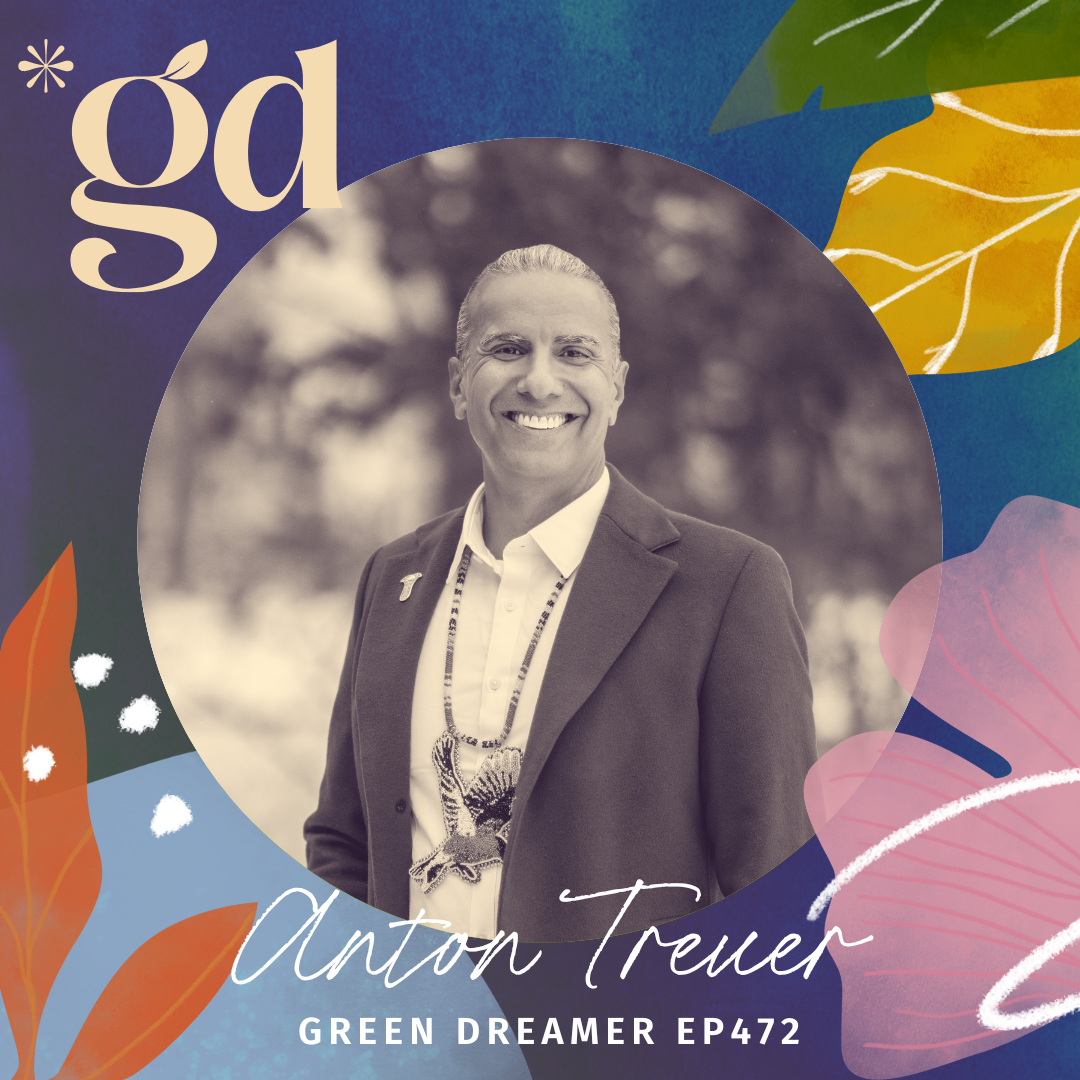
Anton Treuer: Revitalizing Indigenous languages to disrupt colonial thinking (Ep472)
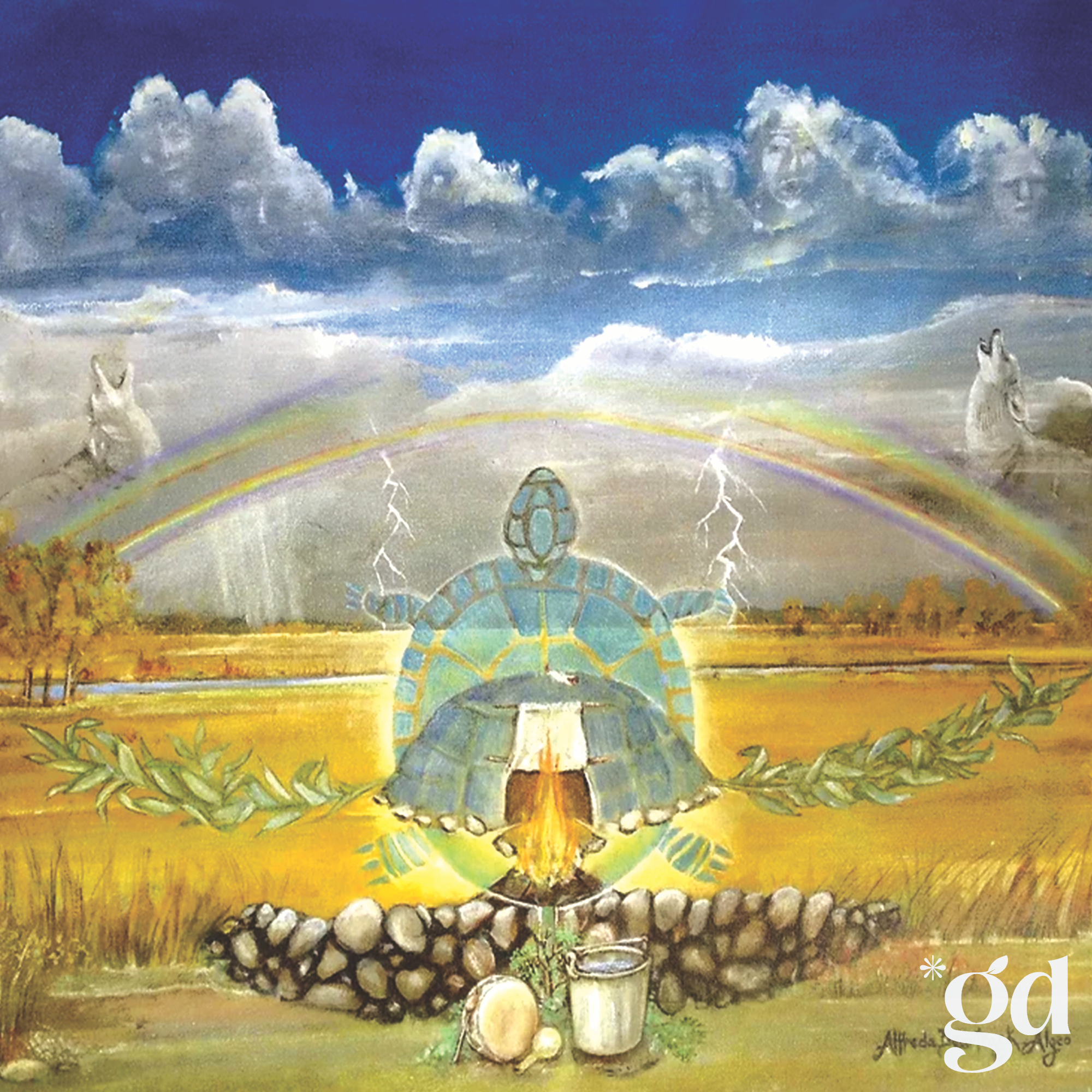
“Everything has the ability to teach us something... Everything is sacred.”
What is the role of language in shaping our worldviews and webs of relations — beyond simply serving as tools of communication? How can the revitalization of Indigenous languages “disrupt the glue for colonial thinking”? And what does it mean to navigate tensions around cultural change and cultural continuity?
In this episode, Green Dreamer’s Kaméa Chayne speaks with Anton Treuer, an Ojibwe author, professor, and public speaker dedicated to Indigenous language revitalization, education, and cultural understanding.
Join us as we explore collective healing through working with land-based languages, deepening dialogue between the oppressor and the oppressed, and more.
We invite you to…
tune in and subscribe to Green Dreamer via any podcast app;
tap into our bonus extended and video version of this conversation on Patreon here;
and read highlights from these conversations via Kaméa’s newsletter here.
About our guest:
Anton Treuer (pronounced troy-er) is Professor of Ojibwe at Bemidji State University and an Ojibwe author and public speaker dedicated to Indigenous language revitalization, education, and cultural understanding. His work focuses on strengthening Indigenous languages and cultures while helping Native and non-Native audiences to better understand history, sovereignty, equity, and cultural responsibility in the modern world.
Artistic credits:
Episode artwork: Alfreda Beartrack Algeo
Song feature: “Let it Shine” by Adrian Sutherland
Dive deeper:
Discover Anton Treuer’s books and other work here
Listen to the talk “The Language Warrior’s Manifesto: Indigenous Language, Culture, and Art in Motion”
Find out more about the Ojibwe Language Institute Waadookodaading
Learn more about the work of Martín Prechtel
Pedagogy of the Oppressed, a book by Paulo Freire
Find out more about the author Angeline Boulley
Expand your lenses:
Independent media is more important than ever! Please consider joining our Patreon or making a one-time donation today.

interview transcript
Disclaimer: Please note that Green Dreamer’s interviews are minimally edited (both audio and non-verbatim transcript) for clarity and brevity only. All statements should be understood as commentary based on publicly available information, and the views expressed in this interview are those of the guest and host only and do not necessarily reflect the views of Green Dreamer.
While we have made reasonable effort in our interview research and production process to ensure accuracy, we do not present our commentary as factual assertion and we are unable to guarantee the completeness or correctness of every piece of information shared. As such, we invite you to view our publications as references and starting points to dive more deeply into each topic and thread explored. Thank you for adventuring with us.
Kaméa Chayne: I first learned about your work through my conversation with Martín Prechtel, and there was a part of our conversation when we were talking about Indigenous languages that have been lost or reduced due to histories of colonization and forced assimilation, to which he raised this comment that you made about how we didn't really lose our languages the languages lost us. So the languages of place and the land and plants are still here. It's really this deeper question of whether we're present to listen and to relearn them.
So I want to continue this thread because language is such a central part of your work. And I want to ask you if there was a particular moment or happening that really affirmed to you the power of Indigenous language revitalization?
Anton Treuer: Oh, I've had a number of inflection points that have really strengthened my own resolve and belief in the power, the healing power, of our languages and cultures. One, I had finished high school with a plan that a lot of high schoolers come up with, which was, I'm going to get out of town and never come back. And I probably took for granted and did not see the value of everything that my mother and others were working so hard to give me.
But when I left, by the time I'd finished college, my whole plan was to come home and never leave. And it took the leaving to really come to terms with that. I also probably freaked my parents out a little bit because I told them, I know I'm a college graduate, but I'm not taking a job, and I'm not going to graduate school. I'm going to walk the earth and hang out with my Elders. And they said, oh, that's beautiful. Good luck paying for that because we're done. And I did it anyways.
And so one of these moments really happened for me when I came back. There was an Elder in our area. His name was Archie Mose. And this guy was born in 1901. He was about 12 years old the first time he ever saw a white man. That was an American experience. He was in his 30s the first time he saw a car. And when I went to see him, he was living in a little modern house watching WWF Smackdown on a TV and laughing really loud.
And I went to see him and he shut off the TV and he said, I've been waiting for you. I said, what? Waiting for me? How could you be waiting for me? I'm just a kid. I actually lived in a different community and had traveled to get there. But he'd had a dream about someone. I looked like this person in his dream. And for him, that was enough. So he said, well, sleep on the couch. So I slept on the couch. And at about 5 in the morning, he's standing over the couch. Hey, get up. You got to drive me to a funeral. I was like, funeral? Who died? What's going on?
And I kind of became his gopher, like go for this, go for that, drive me here, drive me there. And it was a little bit like, you know, Forrest Gump when he realized he could run after that every time he went somewhere, he was running and he never thought it would take him anywhere. But it did. And it was kind of like that for me with my language and culture journey. So a big eye opener.
Kaméa Chayne: Yeah. And you mentioned that after college, you knew that you didn't want to continue the quote unquote conventional path that is taught to many of us. I'm curious what that knowing was. Was it like an intuitive knowing or did you learn something that made you feel like you wanted to reject that path? Or how did that decision to pivot away from what the dominant society tells people to? Where did that come from?
Anton Treuer: Yeah, probably a combination of an intuitive understanding, being a little contrarian, and doing the opposite of what everyone else was going to tell me to do. But I had examples in my life of people struggling through adversity and finding success. My mother grew up with incredible poverty. And she got pulled from school eight weeks out of the year, two weeks to harvest wild rice, two weeks for fishing, two weeks for hunting, two weeks for maple production, because all the kids had to help put food on the table. She ended up becoming the first female native attorney in the state of Minnesota.
I believed in education. And I was thinking when I went to college, that I would follow that path and do what she was doing. But I just come to the realization that maybe I would have been a good lawyer, I don't know, but I would have been a miserable one. And that my heart mattered too. I had to find a way to do what affirmed me, not just for my own self. But I'd also come to this understanding that it's a pretty emotionally bankrupt existence to live life in service of one's self. And there's so much emphasis in the Western world on individualism and up by your own bootstraps and hard work and determination and entrepreneurial drive and all this kind of stuff. And I'm not saying that those things have no value. I'm just saying that they often disconnect us from what we really yearn for.
You know, if you go back to caveman times, all of us, we survived saber-toothed tigers and cave bears, not because we out-competed the person in the next cave or accumulated more resources than them. We survived those things because the person in the next cave loved us and they would intervene if we needed something. So we're hardwired to need connection and belonging and love. And the model in the Western world for what success looks like is individual attainment, drive, materialism, competition. And it just wasn't jiving for me.
And I knew my mother, to her credit, had done a lot of work to bring me to ceremonies and things like this, and so I knew there was more and there was deeper and bigge. And that I was starting to see then, I know it much more deeply now, that the receiving is in the giving that a life filled with purpose is far more fulfilling, you know, than the alternatives, and have endeavored to create that for myself and others.
Kaméa Chayne: Yeah. Thank you so much for these reflections. It definitely feels like a really important time for all of us to really tune in more deeply to our deeper yearnings, because it just feels like a lot of things are falling apart. The quote unquote status quo that a lot of people know is kind of falling apart. So I think a lot of people are also freaking out because this may have been all that they've known, but I think it's important to tune into our deeper yearnings because there might be fear with like uncertainty, but I think it's so important to kind of lean into that, and not necessarily follow this dominant path in terms of what was taught to us or kind of things that we're conditioned with basically.
Anton Treuer: Yeah, absolutely. You know, it's ironic, but Maslow, who had developed this pyramid of human needs and at the bottom was like food, clothing, shelter, and then it kind of goes up and up. And at the top, he put individual attainment. But he started his exploration by looking at Indigenous communities who did not value individual attainment, but community connection. It was a totally different pyramid.
And I've thought about like in our language the Ojibwe language we have a word onakobijigan and we use the same word for my great-grandchild and for my great-grandparent, and it spans seven generations from me to my parents, my kids, you know and so forth all the way out it's seven generations. And so we're told to think in terms of seven generations like seven generations in the past, maybe Native American people were having a hard time dealing with treaties and oppressive policies and kids being sent to residential boarding schools. And our ancestors were thinking, what are they going to need seven generations from now when nobody knows our names? And they thought we would need land, clean water, our language, our culture, and each other. And against all odds, in spite of all the things that happened, we still have these things.
When I think seven generations from now, no one's going to know my name, no matter how many books I write, what will they need? And I think they're going to need the same things. So if I bend my efforts towards making those things available seven generations from now, when my name's not even in the picture, then all my strivings are worth it.
And so I think so much in the modern world, we are told to think in terms of the next quarterly shareholder profit statement. We're told to think about me and mine, and what have you done for me lately? And things like this, instead of the greater good. And I think Indigenous cultures, languages have a lot to teach the world about a really different way to look at things.
Kaméa Chayne: Yeah, really powerful to take a step back and take a deeper time perspective on everything, essentially.
You've mentioned that "Language can disrupt the glue for colonial thinking, which has been fundamentally dehumanizing to Indigenous people," end quote. For people who haven't had the opportunity to learn different languages, it can feel like language might just be a tool of communication with people of a different culture. But it's so much more than that, right? Especially in thinking about like worldviews and relationalities that are embedded in different languages.
So I wonder if you can elaborate on this remark that language can disrupt the glue for colonial thinking. Like, what does that glue look like and how can language help with kind of disintegrating those foundations, especially in today's context where I think a lot of people feel lost or disoriented or uprooted in some sort of fashion?
Anton Treuer: Yeah, that's a great question. Colonization, first of all, has really been about taking one language, culture, religion, and using it to supplant others. It's been about erasure. And it's employed a lot of violence to do that.
Of course, it's not one language. There are several colonial languages. The French and British were busy fighting with one another over who could colonize people. France colonized all these places in the Caribbean and the British took them over and they're trying to recolonize them. So many of them have English as the official language and everyone's speaking French Creole on the street. It's been bizarre.
But when you try to solve your problems with violence, it makes a lot of other problems. Now, why would we think that all of the problems created by the colonial way of solving problems could be solved by the colonial way of solving problems. And they can't. They cannot. The limitations of colonial problem solving and thinking are becoming very evident when we look at climate change, race relations, politics, and it's not just America, it's everywhere. And so within Indigenous languages, you got some really different stuff going on.
I would say that we have issues with all the isms, racism, sexism, ageism. In our language, for example, our primary word for an elder is gichi-aya'aa. And gichi-aya'aa literally means a great being. Our primary word for an Elder woman, mindamuie, means and describes one who holds things together. That's the family matriarch.
Now, in English, you got old woman, elder woman, aged woman, and derogatory words like hag. No wonder everybody wants to get a facelift and a Botox injection, won't admit how old they really are, and feels shame about aging. And how many Elders do we put on the cover of Cosmo? But in the Ojibwe language, you don't have to tell people, respect your Elders. It's kind of built right in with any word you could use to talk about them or to them. And that there's a very different, and I think much healthier frame for thinking about things, which is that there's a beauty in all things. There's a beauty in babies, in young people, there's a beauty in adults. There's a beauty in elders. And there's always something to look forward to. And in a way, we kind of become more important the older we get.
And I think the modern world has us so segregated by age. Elders go with elders and the old folks go home. The first graders go with the first graders. And I think we are meant to be bumping into one another of all different ages and backgrounds and learning from and supporting one another. And we all have something to give as well as something to learn. And I just think that the colonial pattern doesn't show us this.
And there's a temptation, I think, that some people have to think that learning languages is this neat, interesting, or cool, but what kind of economic value does it really have? How much money are you going to make learning some endangered language? And to that, I would say, first of all, does it have to have economic value to have value? And secondly, when you look at this, it's not just we want to hear all the pretty birds singing in the forest because they're all pretty and neat. But how do we help humans lead healthy lives?
Like, I think most humans probably want for their children the same things, their kids to have a good chance at a long, healthy, happy life. To get that, we need all kinds of things. The connection that we get to community, culture, language pays huge dividends in mental health, physical health, community health, and it's part of the tapestry of things that people need to have a long, healthy, happy life.
The news feed is constantly full of people who have financial attainment and die young from a drug overdose. That money doesn't solve all the problems. Now, the absence of money, kind of like the absence of health, can make you miserable. So it's not that money doesn't matter, but it is also not true that it matters to the exclusion of everything else.
Kaméa Chayne: There's a lot here and when you mentioned the intermixing of ages, it makes me think about some more like experimental schooling projects where they're intentionally mixing the ages of people in the classroom. And some of that is showing that it leads to less bullying amongst the children as well because it's more like people are watching out for each other versus possibly having this competitive mindset. So I'm sure there's a lot more there.
And something else I've learned is that the word nature doesn't even exist in most to all Indigenous languages, because quote unquote nature defined in the English dictionary as everything other than humans and what humans create, imposing this conceptual divide, is very much colonial at its roots. And you started talking about this already, but I'd be curious to hear what other worldviews and ways of seeing and relating can't simply be translated from English to Ojibwe or vice versa. Especially for maybe second language learners, because there is no direct translation for certain Ojibwe ideas and expressions.
Anton Treuer: I mean, human beings have been trying to do this for millennia to translate ideas between different languages. And we can get a lot of information communicated, but some things do morph or are lost in translation. And so, you know, I provided a couple of examples, but there are many, many others as well.
One of the things I find really interesting about Ojibwe is that the roots of words tend to be known by everyday speakers of the language. So when you talk to fluent speakers, they'll say a couple of things about saying it in Ojibwe. One is it's just funnier because you're kind of communicating on two levels. There's the word and what you associate it with, but there's also this thicker description behind it.
Also, they'll say things like, well, when you tell a story, it's like you're painting a picture because of the thick description at the root of all these words. And so it lends itself to jokes, metaphor, and nuance in a very different way. And some of those things are a little bit difficult to really convey exactly the same way, or it takes you a couple paragraphs to get at the same idea. But I do think that it is still fruitful to learn from one another, whether somebody's taking the full dive to try to learn another language, or trying to understand some of the differences in perspective and worldview.
But what I do see is that among the things that really come across is a different understanding of value, of what's important, different terms for relating to one another and to things. That there's kind of a life force in all things, that the great spirit made everything. And I know for anybody who has kids who's listening, you'll know what this one's like. You bring children into the world. They grow up. They can even advise you. They've got their own ideas, thoughts, views, perspectives. And so it's kind of like that with everything in the world around us that no matter how it's sourced or how you describe or think of that, that everything has the ability to teach us something, and that everything is sacred and that you can't just take.
Even though to tread on this Earth is to use things, you know, we need food and things like that. But there are ways that are more or less respectful to go about the business of living and that we should try to reduce the power of our negative imprint and increase the power of our positive contributions.
Kaméa Chayne: I want to ask you really quickly about Ojibwe as an oral language or its history of becoming a written language. So did that come about due to associated histories of colonization? Like, for example, I'm aware that the written format of the Hawaiian language is.
Anton Treuer: Yeah. So it is true that Ojibwe, and really most Indigenous languages of the Americas, you know, were oral languages. And today we have a written language for Ojibwe. So the Ojibwe did have a system of writing symbols on birch bark, but those are more what we would technically call mnemonic devices, a symbol for a deer or something like that, rather than this sound is written this way. Some Indigenous languages like the Mayan languages did have written languages and so forth. So really the advent of formal writing systems for Ojibwe began after contact with Europeans, somewhat similar to the Hawaiians. There were missionaries trying to, you know, get their content across in Indigenous languages. And there were a couple of writing systems developed for Ojibwe. They're still in use today. So one uses Roman letters. And another one uses a syllabic orthography unique to Algonquian languages, where there's a symbol for each syllable.
And to me, you know, I understand that we have always had an oral tradition. I understand, like, even the rights of a language and the rights of nature and those kind of things. But there's no way to be successful having a purist disposition. Otherwise, nothing will be acceptable. We used to have, and these are kind of predictable fights, they had them with, you know, Maori with Hawaiian, with Ojibwe with Cherokee with other groups that have had successful language revitalization efforts. And some of the things that would pop up were like, why are you writing that down? We never did that. You know, or why are you writing it that way, as opposed to this way. An orthography war. Other predictable fights would be, why are you using modern technology and recording that? Our people never did that. But whoever's raising the complaint didn't think about the fact that they drove over there in a car to register the complaint.
And so we do have to make decisions about what kinds of technology is acceptable. Even the utility of something like a book, right? Like, what goes in, what does not. And some groups have been wide open and some have been more closed. I think Ojibwe is a little bit in between. Like, we have developed Rosetta Stone, which uses an app on your phone and computers as a language learning tool. We have a free online talking dictionary. Click on the word, look it up, hear it from naturally recorded speech, men and women, different dialects. And to me, those kind of tools are appropriate and contribute to the stabilization and revitalization of our language.
At the same time, we've been busy publishing books and doing all kinds of things, but we had to make some decisions that some things do not go in a book. Certain songs are sacred, certain legends and content are sacred. And for these certain, especially the sacred things, people need to go to their Elders and through their ceremonies rather than walk around them and go get that stuff from a book. But at the same time, there's a huge array of resource development that is ongoing that I think can really positively contribute to stabilizing and revitalizing our languages and cultures.
//musical intermission//
Kaméa Chayne: I've been learning ʻŌlelo Hawaiʻi, so the Hawaiian language. And in doing so I learned about how younger generations who are often second language speakers, meaning they likely grew up speaking English and learned Hawaiian later on, that the version they're learning is often called school Hawaiian, learned in academic settings, and that there's a gap between that and what's considered more traditional Hawaiian, which is what maybe some Elders and people who learned directly from them still speak today because they grew up living and breathing and speaking that language just as their primary everyday language.
And this is obviously very contextual, but I suspect similar dynamics possibly with other languages that had been pushed to the brinks from colonization in some way, but are in the process of being revitalized. And so I think this both/and question comes up, like on the one hand, it may be ideal for people to learn and pass on languages that are more so a continuity of the more original language. And at the same time, the fact that other versions of the same language that may have been flattened in some way, but also added to in other ways, I think that's also a real reflection of what that culture has been through.
So I think maybe this speaks to the tension you talk about between cultural continuity and cultural change. But I'd like to just invite you to elaborate on that as well if it feels fitting here, and I'm curious if any of this is of relevance to Ojibwe and other revitalization efforts you engage with. And yeah just like what does it mean going forward that it's almost like new dialects are being created and there might be this conflict or tension as you mentioned of like what version is more authentic or more correct or maybe it's just that new dialects are being created, not so much from like regionality, but more so from temporality.
Anton Treuer: Yeah, those dynamics happen to everyone. Nobody's in isolation. Like even the Amish struggle to go Amish, meaning to like freeze their language, culture and community and time. Because if the Amish do not pay taxes to their municipal government, they lose their farms. They still have to be integrated with the rest of the world. And it is sometimes heartbreaking that we have to do so much integrating just to make it. But there's also something liberating about that too.
There are layers and layers to this stuff. And yes when you like the strongest way to learn a language is to learn it as your first language in the home. And when you listen to a four-year-old kid speaking any language they do not sound like they have a PhD even if they're a fluent speaker but that this is the strongest way to learn and if somebody keeps learning all the way through to adulthood, kind of an exceptional level of fluency and nuance. Now, you might run into 18-year-olds who've spoken only one language their whole life, and you might critique their language skills or something like that. But that is the strongest way to learn it.
And sometimes I've even heard someone say, like, I don't know why they're bothering with doing a school program or whatever. The only way to learn this is to learn it in the home. That's how I learned. And then I was like, you do understand that many of these communities have no one who is young enough to have and raise children to speak it to anyone at home. So if the only place it can start is at home, then it can never start. And our language dies when you die. And they were like, whoa, hadn't even thought about it.
And so I think whatever it takes, whatever it takes. Yes, a language immersion school or NEST program is maybe second best to learning it as your first language in the home. But if that is the most effective way to intervene and to scale it up, then let's go. You could say the same thing about master apprentice models and other things that have been employed. There are ways to do it well, and there are ways to waste your money. And I think we should hold ourselves to high standards, but we should applaud all efforts.
And in a Hawaiian context, when they were getting started a little over 30 years ago, there were a thousand speakers left, half of them in one isolated island community and the other half Elders over 70. Today you got what, 24, 25,000 speakers. And there are a lot of people who've come through the immersion schools and are raising their children with their language as the first language in the home. So they tripled the population of first speakers by doing an immersion intervention. And so yes, those things matter. And honestly, like it needs to be at scale and easier at every level.
So to me, we need all the things, and the things may be different in different places. The Cherokee have done some really incredible work with their master apprentice modeling, and they also have immersion schools and other things. And we're trying to get this going in Ojibwe country too. The dynamics are different in all of those places. So yeah, in my view, all of it matters, all of it counts. And there's much more to say too, about what drives some of the things. Like the Western world has a way of sourcing, nd this is part of how colonization has worked, sourcing authority in those with money, with colonial credentials and things like that. And so, you know, it's a way that they have orchestrated systems that privilege those with the most colonial underpinnings and teachings, and how people from minoritized populations have succeeded when we have exhibited the highest levels of colonization. Like, in other words, the whiter I speak and the whiter I act and the more credentials hanging on my wall, like the more white folk will trust me and give me a grant.
And so because of that, sometimes our people who have been lucky enough to grow up with our languages as their first languages in the home and things like that, first of all, everyone can see and smell the nature of the colonial system. And then there's sometimes resistance like, are you telling me I'm not the authority? I am the authority. I learned it our way, the old way, the right way, the traditional way, you know, and they'll apply these labels of authenticity. And I wouldn't argue with those authenticating labels. We just have to have perspective. like people used to complain about the a writing system or something like that and ultimately like what is the purpose of these things. And the purpose when you really start asking questions, even your fluent speakers will agree, well if we're getting language out of the little kids then I'm with you. How do we do that effectively? And then you can actually have an adult adult conversation about what the writing system should be and what the all the other different things.
You know, again, there are many layers to this one, but one of the manifestations of colonization is that, like the British at one point claimed dominion over 25% of planet Earth. They didn't have enough English soldiers to sit on the street corner for 25% planet Earth. They did that by taking a lot of people from the culture or community they wanted to colonize, putting them in the British army and having them go do the colonizing. So it's hiring a bunch of Irishmen to go kill a bunch of Irishmen, or a bunch of Natives from one group to go act as scouts in the US army to go kill the next one, you know. And that it's always worked this way because, and we just have to be aware of that and in front of those dynamics, because when Natives fight Natives, white supremacy wins.
Kaméa Chayne: There's so much here as well. And I think it's really helpful to stay grounded in the intention and purpose of something, as you invited, to not get stuck in these kind of purity tests.
Anton Treuer: Right. And imagine this too, like, let's say, you know, Indigenous people had all the knowledge and all the skills and all the beautiful community dynamics from 1491, and put them in this world today and we would all die. Because nobody would know about cars, guns, schools, systems, taxes, like we would all perish. And so in some ways like although we often put the 1491 skill set and knowledge base on a pedestal, and I do admire and respect and love my ancestors, that we need to be able to live at this point in time and going forward.
And I totally understand, like, I'm busy working my butt off and trying to build things and fight for things today. And I understand that like 100 years from now and 200 years from now, my descendants will necessarily repudiate some of the things that I dearly believe in. And I want them to be empowered to do whatever they need to have a long, healthy, happy life.
Kaméa Chayne: Yeah, this feels a little bit related, but you also talk about how with the intergenerational transmission of cultural knowledge, that sometimes as the world becomes more interconnected, as with this modern world, I'm guessing in large part from smartphones, the internet, and so forth, that you say the more disconnected we become at the same time. So how would you elaborate on this idea.
Anton Treuer: Yeah. There is a dynamic that all of us deal with. We see it like with a smartphone or something like that. We can find anybody on planet Earth and we're bombarded by information. And one of the things that happens is it kind of takes us out of our body and into all of these other things and you can find entertainment and a certain level of connection that way. But you also pay a price if we're spending all of our time outward focused.
You know, like, Carl Jung had this quote where he said, "Those who look out dream, but those who look in, awake." And that we need to do both. It's good to dream and to think about the world and what, how we want to connect to it, but it's good to look in and to know thyself and to be rooted and grounded in community, because when we can connect with those things, we can find a higher level of healing. And we can avoid all of that sleepwalking through life if we don't.
Kaméa Chayne: As we start to wind down our conversation here and look ahead, I want to invite you to expand on how Paulo Freire talks about dealing with oppression as a conversation between the oppressor and the oppressed, where both are transformed. Because I personally wonder whether a big part of this has to begin with the oppressor being open to even being transformed rather than wanting to just double down on their values of domination, separation, extraction, and so forth.
Because, yeah, I'm like, we can't necessarily fix or control or change other people. So it can feel a little bit like a lost cause to like wait around until when they're ready or when people who are doing the oppressing have done their own maturation and growing up in some way. So what else would you like to share about this idea that we all need healing, including people who are doing the dominating and oppressing?
Anton Treuer: Absolutely. I think Paulo Freire is a mad genius. I mean, I did feel like I needed a thesaurus and a bottle of aspirin to read Pedagogy of the Oppressed, but it was totally worth it. And there are many different things that he shares that are very powerful.
So one is what he calls the dialogic between oppressor and oppressed, this constant conversation. He would say there's never been a case in the history of the world where the oppressor has liberated the oppressed. That anytime there has been liberation and movement out of oppressive systems it has happened because the oppressed have raised the issue fought protested and eventually shifted the consciousness of the oppressor.
An example would be the women suffrage movement. That did not happen because a bunch of dudes were sitting around in the Senate smoking cigars saying, should we give our wives and daughters the right to vote? Sure, sounds like a great idea, but because women were protesting and raising the issue. And eventually it pricked the consciousness of an all-male Senate that did vote for women's suffrage, but that there has to be impetus, which has to come from the oppressed, that that's unfair. But that through the process, it will transform both.
Like you can think about this if you meet somebody and fall in love, or you bring a child into the world and you love this kid, there's a chemical reaction and both are transformed. And being open to your own transformation and modeling that, is part of the work. Now, Freire said a lot of other things too that deserve a lot of attention. And I'll just point people to the book to get a little bit more.
But one of the things is he'd say there are four pillars that hold up any system of oppression. And only one of them is the external actor keeping everyone down, the man, so to speak. The other ones are happening inside of the oppressed communities. Internalized oppression. How do I speak to myself? I'm stupid. I'll never learn my language. I can't do this. High suicide rate, substance abuse. The second one is the kind of lateral oppression dynamics. She's stupid, she'll never learn language, she can't do it, she's less than. And the third one is intra-oppressed group dynamics where anti-Black, homophobia, whatever will pop up in all groups including the gay community and the Black community.
But we still got to tend to the external agent. But that's the main thing most people think of, getting someone else to act differently so they quit hurting me. But three out of the four pillars happen in our communities, and that we have agency over. How do I speak to myself? I can do it. I'm beautiful. I got this. I believe. There's something to live for, you know? And how do I speak to other people in my group? You can do it. You got this. I'm with you. And how do we speak to other people outside of our immediate group and circle of greatest concern? We can do something about those things. And when we do, we'll move the whole world towards a better place.
Kaméa Chayne: Yeah, really beautiful invitation. I'm thinking about this chemical reaction that you mentioned. And I wonder if that chemical, or the possibility of this chemical reaction, is also in part contingent on us and the people who are fighting for collective liberation, reflecting on like how we are concocting our recipes of change and essentially our how.
Anton Treuer: Yeah. I mean, it can happen in small ways and big ways. All efforts are worth it. But I'll notice something like, for example, I do a lot of work trying to help people navigate tough topics like race and racism or something like that. And we're all often starting in very different places. Like one of the things that's tough for a lot of white folk to talk about this is fear. Fear of offending someone. Fear of exposing an ignorance. Discomfort at the thought of getting beat up around the ears for the sins of their ancestors. And white folk have often been insulated from racial discomfort. It's getting a little harder for them to be continually insulated from racial discomfort, but they can travel the world. Someone will accommodate and speak to them in English and so forth.
And so it's kind of like they've been skipping leg day for life. And now we're saying, we want you to go to the gym and let's talk about race. And they're looking at the gym, which they've never been to in their whole life. And they're thinking, oh, that sounds horrible. That's going to be awful and do it in front of everybody. Are you kidding me? I'm out, you know. And so there's often a pulling away from this conversation from the dialogic that that we're talking about and so the advice for white folk is be brave. Go to the gym, embrace leg day. And we have to be honest, I cannot promise that leg day is always going to feel awesome. Some days it will feel not awesome, but it's going to be worth it. And if you keep going to leg day, you can acclimate to it and it'll actually start to feel good. And above all, you're going to get stronger so you can do your part of the lift.
And for, you know, Black and Brown people and so forth, it's totally different. There the barriers are more like anger and frustration and exhaustion. Like, do I really have to explain it again? Is it really that hard to see? Do I really have to patiently wait again when we don't get to live as long? And there, the advice is, you do. Come to leg day too. You may have to spend some of your time spotting other people. And that doesn't mean that we coddle everyone else's racial fragility and do the minimum and like, you know, that kind of stuff. But part of the work is is spotting other people. And part of the work is identifying the parts of the lift where we have had musculature atrophy, and orchestrating a tone where we're not chasing everybody away from the table and then complaining about eating alone so that we can induce the healthy, productive dialogue so that we can be open to our transformation as well as everyone else's.
Kaméa Chayne: Wow. I really appreciate this analogy of the gym. I think there's a lot of directions to take that as well.
As we're starting to wind down here, is there anything else that I didn't get to ask you about that you feel called to share in this moment? Or yeah, maybe any current projects that you're working on that you feel excited about?
Anton Treuer: Oh, yeah. So first of all, thank you to everybody who's listening in today. I really appreciate the conversation that I'm having with you and with everyone else. I'm happy to extend that conversation. So I have a website, antontreuer.com, got links to the books, free educator resources, lots of speaking events, and just happy to sustain the conversation.
In spite of some really tough times in the world and in our country, I have lots and lots of hope. I think oftentimes there's a big disturbance right before a major progressive change. We saw this happen, you know, with the civil rights movement and lots of other times too. I think a lot of people are feeling uneasy because this world looks so different than it used to. Honestly, within a few decades, the majority of the people in England will be people of color. And it's just freaking some people out. They need not be scared because people of color aren't coming to take everything from everybody else. And honestly, people used to think this about women's suffrage too, that women will get the vote and outvote the men and enter the workforce and take all their jobs. And women did get to vote and entered the workforce and it didn't take anything away. The stock market took right off, roaring 20s, and it grew the pie for everybody. And so the fears are misplaced, but you can't just tell people that and have it all go away. So we just have to show them that.
But I do believe that we will be able to see our shared humanity. We all need healing. Any kind of oppression dynamic is dehumanizing to everyone. And yes, it hurts the victims a lot, but it hurts the perpetrators too. And you can look at like white men who dominate the ranks of school shooters and serial killers and political assassins, and like, hurt people hurt people. And white people are hurting and they need healing too. We all do. And as we are able to push through and have these tougher conversations and build a more just world, I really do believe that the rising tides will help lift all the boats and it'll be a different place for all of us.
//musical intermission//
Kaméa Chayne: What has been one of the most impactful books you've read lately or publications you follow?
Anton Treuer: Well, I've really loved Angeline Boulley's work. She has a new one out that I'm just getting into, and yeah, it's speaking to me.
Kaméa Chayne: What is a motto, mantra, or practice that you engage with to stay grounded?
Anton Treuer: Honestly, I spend a lot of my time in ceremonies, especially in the summer months. I think it's important for me to have time in my affinity space as well as time in mixed company to recharge my batteries and take off a suit of armor. So that's certainly an ongoing practice.
Kaméa Chayne: And what is one of your greatest sources of inspiration at the moment?
Anton Treuer: My kids. And now I also have grandkids. They are full of light and energy and love and fill me with a sense of purpose and hope all the time.
Kaméa Chayne: Beautiful. Well, Anton, thank you so much. It's been a huge honor to share this time and conversation with you. So thank you so much for everything that you shared in this conversation. As we wrap up, where can people go to further support your work? And what closing words of wisdom do you have for us as green dreamers?
Anton Treuer: Yeah, so I already mentioned the website, antontreuer.com. They're easiest ways to connect with me and see what else is going on. And I just want to appreciate everybody who's leaning in and doing the work. Sometimes it feels like everything out there is so overwhelming.
But I think about this place where I live, it might be a little hard for you all to see right now, but I live in Northern Minnesota. My parents had acquired this property early in their journey and someone had cleared off all the big pine trees and turned it into fields. And they started planting trees. They planted over a million trees here. Of course they had a child labor force, but there's a towering forest of pine trees all around me now. And I think it goes to me to show that like with all the problems in the world be it climate change, race relations, politics, whatever, it's not like we need to move this mountain of problems humans have been making for thousands of years right now, it's more like we need to keep planting the seeds and it can change everything. And ultimately, that's the work.