
Mike Albertus: Reshuffling land, reconfiguring power (Ep456)
“The social, economic, and political power associated with land ownership often allows those who own land to dominate those who do not.”
What does it mean to look at power through the lens of land stewardship and ownership? How have different social factors influenced how the “reshuffling” of land has historically played out?And what does it mean to navigate the tensions between how land is valued as commodity through capitalist reductionism, versus in much more multi-dimensional ways as cultural, spiritual, and ecological webs of belonging?
In this episode, host Kaméa Chayne speaks with Mike Albertus to explore themes from his latest book, Land Power: Who Has It, Who Doesn't, and How That Determines the Fate of Societies.
Join us as we discuss how land reshuffling might continue to take place given current societal trends, examples of work being done to reconfigure land power for collective benefit, and more.
We invite you to…
tune in and subscribe to Green Dreamer via any podcast app;
subscribe to kaméa’s newsletters here;
and support our show through a one-time donation or through joining our paid subscriptions on Patreon or Substack.

About our guest:
Michael Albertus is a Professor of Political Science at the University of Chicago. He studies how countries allocate opportunity and well-being among their citizens and the consequences this has for society, why some countries are democratic and others aren't, and why some societies fall into civil conflict.
His newest book in press, Land Power: Who Has It, Who Doesn't, and How That Determines the Fate of Societies (Basic Books, 2025), examines how land became power, how it shapes power, and how who holds that power determines the fundamental social problems that societies grapple with. He is also the author of Property without Rights: Origins and Consequences of the Property Rights Gap, Authoritarianism and the Elite Origins of Democracy, Coercive Distribution, and Autocracy and Redistribution: The Politics of Land Reform. Autocracy and Redistribution and Property Without Rights both won several book awards.
Artistic credits:
Song feature: “Pyre” by Oropendola via Spirit House Records
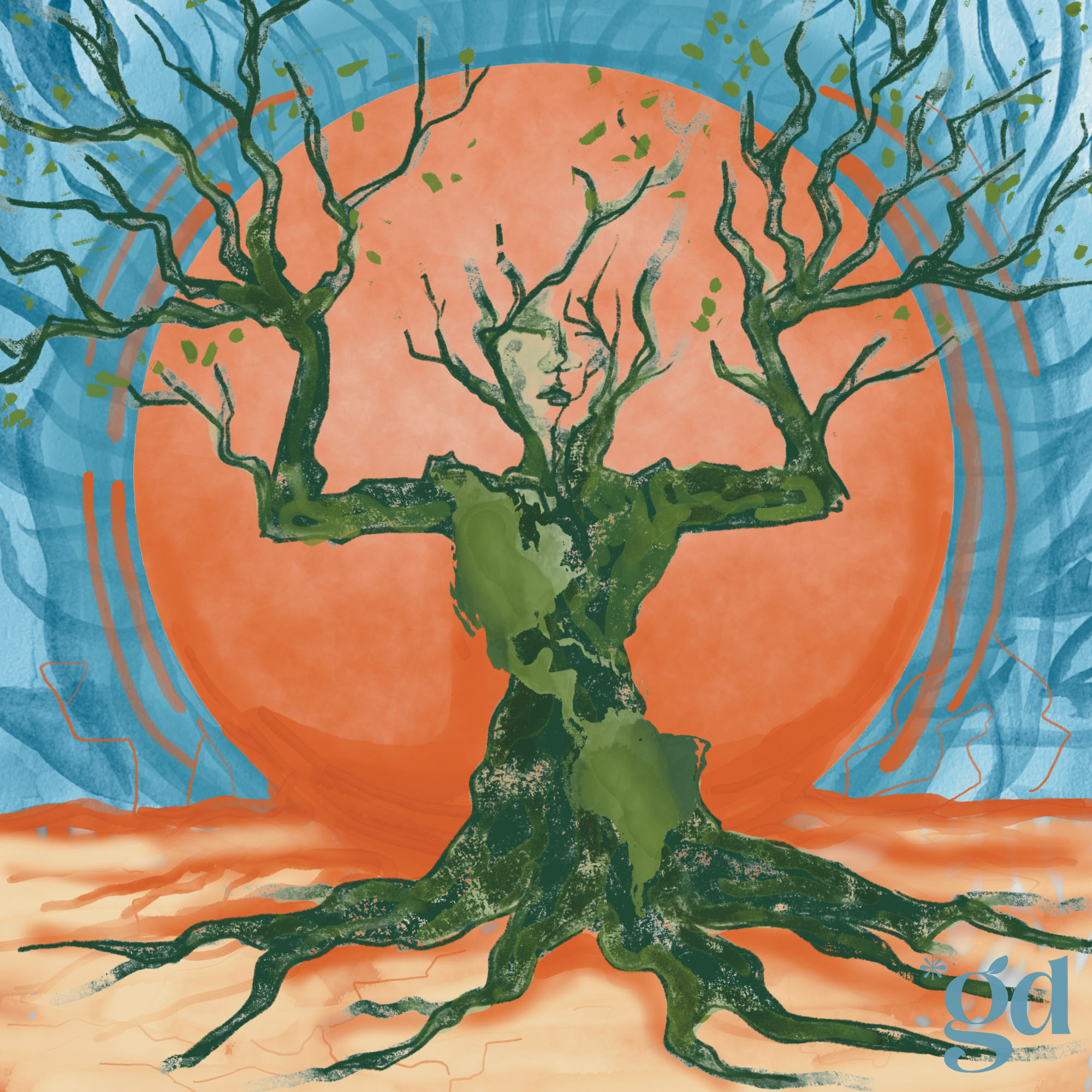
Episode artwork by Katia Ostermayer Carneiro
Dive deeper:
Land Power, a book by Michael Albertus
Property without Rights, a book by Michael Albertus
Authoritarianism and the Elite Origins of Democracy, a book by Michael Albertus
Learn more about the Prairie Band Potawatomi Nation becoming the first federally recognized tribe in Illinois
Watch this Planet Critical interview: “The Age of Territorial Expansion with Michael Albertus”
Expand your lenses:
Independent media is more important than ever! Please consider joining our Patreon or making a one-time donation today.

interview transcript
Disclaimer: Please note that Green Dreamer’s interviews are minimally edited (both audio and non-verbatim transcript) for clarity and brevity only. All statements should be understood as commentary based on publicly available information, and the views expressed in this interview are those of the guest and host only and do not necessarily reflect the views of Green Dreamer.
While we have made reasonable effort in our interview research and production process to ensure accuracy, we do not present our commentary as factual assertion and we are unable to guarantee the completeness or correctness of every piece of information shared. As such, we invite you to view our publications as references and starting points to dive more deeply into each topic and thread explored.
Kaméa Chayne: I would love to start off just by welcoming you to share a bit about your earlier personal inspirations to start focusing on land and looking at all that that entails. So, where did this curiosity start for you?
Mike Albertus: I've always been interested in fairness and equality to a degree. So, when I went to graduate school, I was motivated by questions of inequality and equality and how to foster inclusion within societies. And as I was doing work on those questions, very preliminary work, I happened to travel to Latin America where, I remember climbing this hill in central Santiago and looking out over the city and seeing the real vast disparities in wellbeing across the city, despite the fact that, at the time, Chile had been a democracy for well over 20 years.
And it got me interested again in this question about how societies can treat their citizens well and include them, and foster prosperity for all. And in trying to answer that question with modern social science tools and data, I continually ran into this problem. Thinking about this question historically requires thinking about the land where people lived.
Governments got involved in rearranging and reallocating land from some people to other people. And so that's what got me interested in that initially. And I'm also a physical and visual person, and I'm always curious in hidden histories. And so that also coincided with attracting me to the uniqueness of land and the importance of land and how it shapes human societies.
Kaméa Chayne: Yeah, thank you for this introduction. I mean, land is just so central to a lot of different topics, whether it's well-being, or policy, politics, economics, or anything. So yeah, I really admire your ability to center this and think through such an immense topic, which we’ll of course kind of pick apart the different layers of this conversation throughout.
But you start off the book by saying, “Land is economic power. Since the dawn of recorded human history, land has had immense monetary value through the natural resources it supports, such as wild animals, plants, and precious metals.” I'm curious to unravel this a little bit because land wasn't always, and even to this day, isn't universally viewed through the lens of monetary value based on different worldviews.
I'm thinking about Indigenous worldviews of how people feel that their perception is that they belong to the land. People belong to the land, versus the land being ownable by people, whether by one person privately or by a collective.
So I'd like to ask you about the history of land becoming commodified by certain cultures and political systems with that sort of attributed value in monetary currencies. What are some of the deeper roots that we should be aware of here?
Mike Albertus: Right, so even though some societies talk about “belonging to the land,” of course, at the same time, land has this very deep significance for those societies and those communities, right? And in that sense, it has deep value, it has cultural significance. It has, of course, sustaining value as well through what it provides, as well as many other components or aspects of value. It's very multi-dimensional, right? And very deeply tied into identity as well.
The relationship between humans and the land has shifted quite dramatically over the course of human history. And in particular, in the last 500, or maybe a bit more, years, there has been this shift towards, as you say, the commodification of land and the assigning of more discrete value to specific plots of land. And also a greater tie between individuals and property that they delimit and own themselves, also to the exclusion of others.
So, you know, that dates back to The English Enclosure Movement and acts from the 1600s to the 1800s. But also dates back to feudalism and the development of human hierarchies on the land that have to do with the surplus and the appropriation of surplus as well. All of that advanced with colonialism and imperialism, where land started trading hands at a rapid pace. And it could be sold by entrepreneurs to settlers for profit. It could be grabbed by settlers themselves and from Indigenous communities. And that advanced throughout the 1800s and up until the present.
We see that there’s this spread of private property rights regimes that embed at their very core this notion of land being alienable, exclusive to individuals.
There's some shifts in that recently, and that's certainly not the whole picture, and we'll probably get into that. But as a general trend, that is one that's a dominant trend.
Kaméa Chayne: Yeah, and I want to pull out this thread you mentioned earlier that a lot of Indigenous communities have a more multi-dimensional way of looking at the value of the land. And I think that's at the heart of a lot of this, is that land isn't valued just for their extractable value. There's also deeper value in terms of relationships, cultural practices and ties, and much deeper things that are less quantifiable, I guess.
I'm sure we'll talk more about this in a little bit as well, but I want to come back to power.
So, your book talks about how land became power, how it shapes power, and who holds that power determines the fundamental social problems that societies grapple with. So this word “power” comes up a lot, and I want to invite you to elaborate on what you're referring to when you talk about power, because I've also talked to different people who are curious to kind of rethink how we define power altogether or distinguish power-over in the sort of domination and control type of way versus more collaborative power, or power-with, which might be more interdependent.
So, what is power in the way that you've looked at it in this regard?
Mike Albertus: I have in mind when I talk about land power, more of the former idea that you mentioned, which is sort of the elements of control and domination-over, or at least preeminence or positioning vis-a-vis other people, right?
The social, economic, and political power associated with land ownership often allows those who own land to dominate those who do not.
There are countless stories of this again and again, and there are several which I give in the book. But I'm thinking about the ability to, again, project influence and authority over others. Of course, that's not the only way that power can be exercised, but that's what I'm most interested in in my book, and I think a really critical element of thinking about how land has shaped the modern world as we live today.
Kaméa Chayne: Yeah, thank you for that clarification. One of the key concepts that you introduce is this idea of “reshuffling” as it relates to who owns or holds or has control over land. So, can you expand on what this refers to and maybe some major examples from the Great Reshuffling in the last two centuries or so that can help to kind of illustrate these points and the different factors that might influence how reshuffling plays out?
Mike Albertus: Sure thing. When I talk about “land reshuffling,” what I have in mind is the shifting of land, or the ownership of land, from some people to other people.
I call the “Great Reshuffle” expropriation, reallocation, and redistribution of land.
This period of upheaval and land ownership over the last two centuries across the globe, doesn't always have to happen like that. There can be less coercive forms of land reshuffling as well, but that's the dominant form. I'll give you two major examples that highlight different kinds of reshuffling.
One would be the reshuffling that happened in China after World War II, and the other would be the reshuffling that occurred in the United States through the early colonial period and then up through the 1800s, even into the 1900s.
So in China, after World War II, the country had been struggling with communist insurgency in the northern part of the country for several decades. And it was characterized by considerable inequality in the ownership of land. So there were a relatively small number of landlords that controlled the disproportionate amount of land, and many people were landless or rented land as tenants and worked on the land of those landlords.
What happened starting in 1949, after the communists vanquished the nationalists from China, what happened is that they instituted a major program of land reshuffling. And in fact, it was the largest episode of land reshuffling in human history. Over less than five years, about 430 million peasants were affected by this program of land reshuffling that took land from landlords and gave it to people who worked on the land and to the landless.
In short order, that sort of moved from Northern China to Southern China over several years. And then in the mid-1950s, in 1955, Mao Zedong decided to collectivize land. So initially, there was this idea that land could go to tillers to private, individual families, but then there was a move or a shift in policy to collectivize land. And so people were pushed into progressively larger collectives on the land and were then forced to farm the land collectively.
So that had enormous implications for the development in China.
[Land reshuffling] contributed to the Great Famine, the loss of several tens of millions of Chinese people.
It damaged the environment and led to delayed development. So that's one type of reshuffling. A very different kind of reshuffling is the reshuffling that occurred in the United States through the settlement of what ultimately became the United States. That was a reshuffling that occurred on the part of settlers. And it occurred in several different ways. So it entailed, of course, the dispossession of Indigenous peoples as settlers arrived to what became America. And then the way in which land was allocated among settlers, that sort of reshuffling ultimately shaped very different patterns of relationships to the land and associations to the land.
So, for example, in New England, land holding became fairly broadly distributed amongst settlers, amongst men, white men settlers. And that set the stage for this experiment in relatively radical forms of democracy. Certainly, when you think about the time in which it occurred. And that was a big contrast with what occurred in the South of the United States with the plantation economy and importing slaves from Africa and people from Africa to enslave them, and the creation of this very hierarchical, authoritarian system of extraction from the land.
And then further on, when you think about the 1800s, you had things like The Homestead Act as the United States acquired more land, first from the Louisiana Purchase in the early 1800s and then from Mexico after the Mexican-American War. This notion of displacing Indigenous people, pushing them further and further west, became untenable once the United States had land that ran to the Pacific Ocean.
A new policy of reservations arose, and that generated yet another sort of relationship between both settlers in the land as well as between Native peoples on the land.
Kaméa Chayne: Yeah, and these are just two examples, as you shared, and this history is so hyper-localized and contextual to every place, so I'm sure the reshuffling in every place looks a little bit different depending on the dynamics and what has played out. I just thought of this, but I always like to think about the more-than-human world and look to lessons that we can learn from the more-than-human world, or think with the more-than-human world.
So I wonder if this concept of reshuffling, or even the “value of land,” do you think this exists in the more-than-human world? And certainly, humans operate at certain levels that are different from other species, and other species might operate in their ways that we still don't really understand and are still learning in terms of how they organize themselves amongst their social hierarchies and their own collectives.
I’m just curious if you've thought through how this concept of reshuffling might be approached by other species, whether there are other keystone species like wolves, or, I don't know. Just interested to think about that.
Mike Albertus: You know, that's really interesting. I know a lot less about that than I know about how humans have associated with the land. I will say that as I'm thinking through the many thousands of nature shows I've watched in the past and the biology classes I've taken, it's definitely the case, right, that…
Different species relate to land in very different ways, whether it’s migration routes or seasonal use of the land, or competition between different bands of animals.
And in some cases, even between different species. And so, yes, there is a really interesting thing to think about in terms of how it is that different species relate to the land in different ways.
Kaméa Chayne: Yeah, and as you mentioned, maybe like migratory species and birds, and so forth, relate to land differently than trees per se, or like plants that are very much rooted and have their entire lives kind of intermingling with their mycelial networks underground, and how that social network might feel. So yeah, these are very open-ended questions that we won't have answers to, but I think it's always interesting to kind of think in those lenses as well.
Mike Albertus: It is worth saying, I suppose, that of course, how humans have related to the land, in terms of whether they're sedentary or mobile or nomadic, that has shifted a lot over time. So, 12,000 years ago, people were nomadic. And so they approximated to a much greater degree some animal species that also move with the seasons. People followed, oftentimes, herds of animals with the seasons or the harvest of fruits and nuts or what have you.
And so, that also became etched onto the social patterns that were embedded within communities for how they related to the land. You know, there was not the same form of individual, exclusive, alienable types of relationships with the land that we see today.
Kaméa Chayne: Yeah, this reminds me of my recent interview with a Maasai human rights lawyer, Joseph Oleshangay, where essentially he talked about how the Maasai people are historically nomadic migratory peoples. And he talked about how the value of the ancestral lands that his community calls home is at odds with the value system of his nation's state government, which doesn't have direct relations to that place to be able to see the multifaceted value that we talked about earlier of that place.
So the nation state is being guided by questions of monetary value systems of what configuration of land ownership or territorial control of this place can be more rewarding to them. So like, is it commercial tourism that can generate more money and taxable resources for the government or ancestral communities who, in many ways, don't even have their community lives and relationships turn transactional and commodified in taxable ways.
Mike Albertus: Yeah, I think that's exactly right. I mean, there are very different ways of approaching the values and the use of land, right? So I've seen something very similar with communities that I spent time with about a year ago in South Africa, the Mpumalanga region of South Africa. Communities that over the course of the last 150 years or so have moved around a bit in terms of where they lived through parts of Kruger National Park, Swaziland, and ultimately to this area in Mpumalanga, and that has generated difficulties in terms of how they relate to nation states.
In some cases, transcending boundaries, in other cases, making it difficult to think about the notion of restituting land that they were forcibly displaced from in a discrete episode in 1954, when they were removed from the land that they were on at that point in time.
And yes, it generates difficulties.
Nation states don’t understand or comprehend how people relate to the land when they’re distinct or different from predominant forms of land holding.
Forms that states can identify, delineate, record, and use as a basis of getting to know their populations, taxing them, those sorts of things.
Kaméa Chayne: Yeah, and I'm friends with Kānaka Maoli and Hawaiians who don't identify themselves as American. And so I think there are also these different layers of reality going on. For example, for them, the laws of the ʻĀina, or the land, and the language of the land are more real and more important to them than the rules and realities kind of imposed by the state. So it's kind of like, yes, it's all of the above, but also, some people choose to prioritize and see some things as more real than others.
I see all these different layers of reality going on. So there's the nation-state-imposed reality where people own land. And when we divide up population size against acreage, well, there's scarcity based on supply and demand. So that affects acreage valuation in a certain way. And maybe the laws of the state might say, this corporation has now secured legal rights to drill for oil in this Indigenous territory. But it's legal, and that's how this world and reality work.
Then maybe some rivers need to be dammed up by this corporation, so they can better manage and control these resources. And maybe in local areas, it's illegal for people to harvest their own rainwater, even though the reality is that it rains and people can collect that water to use, and not kind of feed into this manufactured scarcity.
So there's that layer of imposed reality. And then there's also the laws of the Earth, right? Weather events are becoming more extreme because we have dominant societies that created these kinds of value systems that financially reward extraction and hoarding. But how about rewards of reciprocity and balance and care and networks of really rooted relationships?
And yeah, we kind of talked about worldviews of belonging earlier. But yeah, I think I struggle thinking through all these different layers of reality that people are operating from. And I think the tension between them is kind of at the heart of a lot of our crises today, where particular realities are being propped up as more real and the end-all-be-all compared to other realities of the land, and of biology, and the science of life that is equally if not more real but that kind of gets swept under the rug in favor of other realities. So I just want to toss this out there and see where you might take us with this.
Mike Albertus: Yeah, there's a lot there. And I agree that there are a lot of fundamental tensions in terms of systems of governance, and local practices, local conceptions of, or links to land, and the externalities or the consequences that those have for broader society, for locales, and for individuals, right?
So, you can even think about something like fencing in the American West or something like that, right? How private property has ultimately carved up much of the American prairies, or what were the American prairies. And now, people have fenced in a lot of that land, which makes it very difficult for, let's say, antelope or bison to transit the land in ways that are natural. That generates, then, problems for people who might have relied upon those resources or had relationships to those animals.
And so there's this kind of disjuncture. And you see that replicated with things like the climate crisis.
I would argue that many modern systems of government and governance are not well-equipped to deal with the climate crisis.
The climate crisis is something that is ongoing and that’s not confined to any locale. Climate, weather patterns, and ecosystems are intimately connected across space.
So governments that are delineated in space, that are confined to certain territories, and that have short time horizons, short periods in which they operate, are not well suited or situated to think about these longer-term problems.
And so the ways in which they think about ordering land, ordering territory, and thinking about transacting in that are oftentimes incommensurate with thinking about these broader problems. And that's not to say that you can't come up with some solutions that might work kind of as a patchwork to make things not quite dire, not quite as complicated, or part solutions. But they're not necessarily the kind of solutions that you would come up with if you thought about this from first principles and what you would do knowing about the dynamics that are currently in force.
Kaméa Chayne: Yeah, and I'm also thinking about when corporations might own like thousands of acres of forest along the coast, and they get to make decisions about what to clear-cut and whatnot, but the impacts of what they do within the boundaries of their private land ownership have impacts well beyond those borders and boundaries, right? It affects the regional water cycle. It affects soil quality, runoff, and so forth.
So I think a lot of these laws of the land kind of transcend the laws that people have been trying to operate within because the water cycle, the carbon cycle, all these cycles don't know these same boundaries and territories of governance that people have been kind of taught to work within the confines of.
Mike Albertus: Of course, yeah, I mean, I think climate and ecosystems and biodiversity are great examples of this, right? What you do on your land has implications for all of those, and for other people and for other things in the environment, that have to experience those consequences without being able to have a say in them and a say in what you are doing on your own land.
And so, you can see, for example, there's a family that owns about 2 million acres of land, mostly forest land, on the West Coast, mainly in Oregon and Washington, a bit of Northern California. And how they manage timber and the forest has huge implications for biodiversity; it has big implications for the environment more generally. But it's under a form of private ownership. And in a similar way, one story that I tell in the book is about the settlement of the Amazon.
There’s this episode of military rule and tension over land inequality in Brazil that comes down from the colonial past. And, you know, in the 1960s and 1970s, there was an attempt to try and reshuffle that land. And landowners push back, and they team up with the military to come up with a plan to instead settle parts of the Amazon.
And ultimately, they build this infrastructure in the Amazon, they settle people in the Amazon, and that comes to take on a life of its own, such that now those are some of the biggest hotspots of deforestation. And those decisions, and the decisions that individuals make about what to do on the land that they are on, and the jungle that they inhabit, whether they clear-cut that for cattle grazing or not, have big implications for everybody. But that's not how it works in practice on the ground.
Kaméa Chayne: Yeah, I think a lot of this is circling back to the multi-dimensionality of value beyond a more reductive value as defined by the economy. But you mentioned the Amazon, and I'm thinking about how the Amazon Indigenous tribes who have so much ancestral knowledge. For example, they know that “this plant has this medicinal value,” or, “this plant is good for X thing.” There's so much hyper-localized, specific land-based knowledge that is specific to a particular small pocket of the Amazon, even.
These are forms of value that outsiders would not know because they don't share that same sort of intimacy with place as the Indigenous community has. So people might go in and, you know, this is a very biodiverse forest, but I don't actually understand the value that is held here. And so, I'm just going to clear-cut this because the broader globalized market has high demand for beef right now. And that's what I can sell to the global market to earn a lot of monetary wealth. So I'm going to clear-cut everything because I actually don't understand the true value that is here in favor of another form of value taught to me. And also very materially what a lot of people need to survive in this day.
So, not to kind of portray it as a kind of black or white picture, because that is the lived reality for a lot of people. People have to earn money to support their families in a lot of ways. But just to add more to the nuance and kind of bring back this theme of the different forms of value that exist, but ultimately the forms of value that are more so defined by power in the sort of power-over kind of way that we're talking about.
Mike Albertus: Yes, I would agree. People who face these sorts of trade-offs are also thinking about, what are the markets that currently exist, and how can I plug into those markets? So, whether I decide to clear-cut my land and graze cattle, or clear-cut it and plant soybeans, or whether I turn it into a sustainable ecotourism site, or something completely different than all of those, is in part a function of what markets look like and what people can connect to. At least for outsiders who are kind of coming to a space, or coming to an area.
And at the same time, you're right that people who live in these places have very intimate knowledge of them, right? I occasionally teach a study abroad course in Southern Mexico for the University of Chicago, and we went to a collective farm. They don't necessarily farm the land collectively, but it's collectively owned, that particular area.
I remember this farmer taking us around and kind of digging with a rake and a rake handle under different trees and under different bushes and picking up handfuls of soil, and having us smell them and look at them. And he was even tasting them, and looking at the different fungi and bacteria that were growing there and thinking about how that could be used at different times of year to grow organic fertilizers, rather than going down and buying some sort of harsh chemical fertilizer at the local store to use these as organic fertilizers.
It demonstrates, yes, this very deep knowledge of your own land and the diversity that is on your own land and how it can be used. And that does require a very significant degree of, rootedness in the land and connection.
Kaméa Chayne: Yeah. And to come back to the way that power is being exercised in the domination form of way, what do we know in regards to how different forms of land ownership or stewardship, like private property for more individuals versus more collective ways of stewarding land? Obviously, this is painting with very broad strokes because everything is so context dependent, but broadly speaking, what do we know about how these different forms of stewardship affect the well-being of the land itself in terms of biodiversity, pollution, capacities for regeneration, and so on?
Mike Albertus: It is very context-specific. Take, for example, the ways in which different collectives or groups of communities might relate to the land. So let's go back to that example that I mentioned previously about collectivization in China.
So collectivization in China was something that was a diktat that came down from on high from the Chinese Communist Party, and it forced people against their will into these large collectives. And inherent in that was this extreme property rights insecurity, right? People had no idea what they had to give up their land that they had for some period of time to get some land that they didn't know, how they were going to relate to it, where it was going to be. And what that generated for people was this desire to strip the land they were leaving with all that they could take from it. So people started cutting down trees and that sort of thing. And then they entered into these collectives.
The Chinese government used land collectives as a way to foster industrialization by squeezing surplus and then repurposing them for urban growth.
And so that too meant that they wanted to get as much as they could out of collectives. Ultimately, they ended up kind of over-fertilizing on the land, they were extracting resources from it, et cetera. So that's an example of sort of collectives gone bad, right?
On the other hand, that's a very artificial form of a collective that was created by authoritarian force in a very unnatural and rapid way. If you contrast that to Indigenous forms of community on the land, they are the complete opposite of that. So some of the communities that you mentioned in the Amazon or that I've encountered in places in the Peruvian highlands or in the lowlands of Bolivia and places like that, communities that have longstanding ties to the land and that are well-functioning communities that are fairly autonomous and haven't been so severely intervened upon by the state for strictly production and the like.
Those tend to have much better forms of stewardship of the land, right? And certainly much better forms of stewardship to the land, typically, than private forms of land ownership, right? And so, private owners on the land, on the one hand, have security and ownership, and so they can think about the long term. On the other hand…
There are all these constraints, restrictions, distortions and incentives for how [land owners] think in terms of production, extraction, economic value, and not necessarily in terms of biodiversity or soil health.
There's not a clean mapping from the scale of land ownership into the treatment of the environment.
But depending on what you know about the local forms and rules around land ownership, it can tell you a lot about how you would expect the environment to be treated and the land to be treated.
Kaméa Chayne: Yeah, there are so many factors at play here. And I think what you point out in regards to the nuances of collective land stewardship is really important because I think sometimes conversations around political forms, whether like capitalist or communist or communalist or more community-centered forms of land stewardship, I think they focus more so on the human aspect, like configurations of power amongst humans within a nation or community.
But there's still the deeper question of relationship to place that often I think gets glossed over, which speaks to places in the world, where, like you point out, local communities without deep and right relation to the land might turn to practices that are still ultimately extractive based on what the broader economic systems might reward, where it still creates these tensions between local communities and Indigenous communities in a similar region.
It's also very possible for truly communalist and egalitarian societies of people to be extractive in their relationship with the land, where maybe their ultimate goal is still to stay in the globalized rat-race of GDP, endless growth of endless monetary wealth accumulation, and extraction for productivity, and so forth. So yeah, I want to ask you if there's anything else you want to add to how intimacies with the land relate to egalitarianism or more collectivized forms of stewardship.
Mike Albertus: Certainly, when you think about intimacy with the land and knowledge of the land, and feeling like you are part of and belong to the land. Those all tend to foster long-term thinking and the notion or the belief that you should not only experience belonging to the land yourself, but that subsequent generations should also experience that. This generates greater stewardship of the land.
In places such as Australia, Canada, South Africa, and the U.S., to a degree, governments are beginning to establish co-management arrangements with Indigenous communities.
This is happening for both public, and, in some cases private, lands, recognizing the value of Indigenous stewardship practices. The different perspectives that they bring to that stewardship, with the idea that, again, they're trying to extend the longevity of the land, have its use be sustainable for future generations.
Kaméa Chayne: I want to weave in this quote you share where you say, “Perhaps because most social critics and scholars call the world's bustling cities home, few have reckoned fully with how deeply humanity's connection to the land has shaped every nook and cranny of modern life.”
I think maybe this gets at a different point, but it does remind me of my past interview where Rasul Mowatt talks about cities as these fabricated sites of extraction, where maybe every aspect of life in cities, from leisure to networks of food and sewage and energy, are all wired through the logic of control and extractive relations in some way. That might also get obscured by the layers of disconnection that then exist between people and the sources of these things, like food, water, energy, waste, and so on.
But what are you getting at when you point out that a lot of social critics who live in cities haven't really reckoned with how much our relationship to land has shaped urbanized life?
Mike Albertus: There are a few things I think that I meant by that particular quote. One of them is simply that a lot of people don't think about where their land is from, right? In the city environment, they think about the urban fabric, and they don't think very much about the land on which they walk, where that's from, what the history of it might be, right? And so that's one important point.
I think another one that's related to it is, even how patterns of urban life are themselves very deeply shaped by our past choices about the use of land and the allocation of land, right? So if you think about that in American cities, let's say Chicago, where I teach at the University of Chicago. That is a city that is very deeply affected by settlement patterns, early settlement patterns in the United States, in the sense that land that we're sitting on in Chicago used to be Indigenous land. It was inhabited by Indigenous peoples. That fluctuated somewhat over time. Then the land passed forcibly to the federal government.
The city of Chicago was laid out along the Chicago River. And then the ultimate patterns that we see in terms of settlement today were fundamentally shaped by the Great Migration of African Americans moving north from the South to escape the Jim Crow South.
That itself was seeded by the failures of post-Civil War Reconstruction to grant formerly enslaved people access to land. People who had worked that land were promised 40 acres and a mule, but that never was forthcoming. Or that promise was quickly broken when Lincoln was assassinated, and Henry Johnson became president. So most people fell back into sharecropping and into the Jim Crow South. And those who could escape, escaped. And many of them moved north to cities. Patterns of exclusion and marginalization were replicated through practices like redlining, but also through zoning restrictions.
Such efforts were done to segregate Blacks from whites and to relegate them to less desirable parts of cities, and we still live and breathe that today. I mean, I see that on my bike ride down from where I live in downtown Chicago, down to campus. You could see it etched into the very neighbourhoods. And so that's another thing I think that's really important to think about, and that I meant by that quote.
Then there's a final component, which is that a lot of people that I talk to oftentimes don't think, and people in cities aren't thinking about how much they rely even today on the land, right? We're here talking through our computers, which are full of rare Earth metals that come from the land.
This race for rare Earth metals, which is ongoing in the discussion of trying to extract minerals from Greenland or from Ukraine, is rooted in this drive for new technology.
It's also rooted in technology associated with the transition to greener technology. As well as there are these questions about what it is that we eat. With the majority of the world's population now living in cities, there's vast quantities of land that are used simply to feed those cities, right? In the United States, about 30 percent of land is used just for grazing and raising feed for cattle, mainly for the consumption of beef, right? And that's remarkable. And a lot of that is going to urban dwellers.
And so that connection, I think, people feel divorced from that. But if you take a generation or two or three back, everybody's got roots in the land. And so those stories, I think, are important ones to draw on.
Kaméa Chayne: Yeah, I mean, everything you shared in terms of the hyper-contextual histories of place and our current entanglement with land, no matter where people live, I feel like these are things that are such foundational knowledge that everyone should learn in schools. Like, this is the history that everyone, wherever their school, is sitting on. That hyper-localized history is so important just for, also, people's sense of connectedness to place, no matter how many layers of history and events have kind of happened in this place.
But I think it can, like you said, like you drive past a certain place and you can see kind of the legacies of something that happened decades ago, and you can kind of feel that connection to that history. I think that can be very enriching and grounding for us to be connected to. So I appreciate you bringing these into this conversation. And I just feel very invigorated by this discussion because I feel like there are still so many different directions that this conversation can go in.
In terms of looking from the present to the future and looking at current trends, how do you see reshuffling continuing to play out or evolve, given our current trends of this continued monopolization of power and control that feels mostly monodirectional right now? And also other things like changing demand and supply in the economy based on things becoming more digital and online, or more AI-driven, or things that are more service-based and less physical, and so on. So, what have you thought through in terms of looking at current trends into the future?
Mike Albertus: There are a number of interesting trends right now that are playing out, and it's gonna be fascinating, I think, to follow them in the coming years. So one of the trends that's playing out now is increasing concentration. So of land, ownership, and property.
Since the 1980s, inequality has risen across the United States and much of the developed world. This trend is now becoming evident in land and property as well.
And, you know, it's been advanced through an aftermath of the Great Recession and the housing crisis then, and the pandemic as well. And so now we're seeing the rise of institutional investing, you know, private equity and the like, in housing and the land. And both of those, I think, are important trends to think about for the coming years because they're advancing relatively quickly.
There's also an increasing trend in billionaires buying up large swaths of farmland, people like Bill Gates, Jeff Bezos, and the like. There's also been more displacement and resource extraction linked to coming green technologies, whether those are batteries for electric vehicles or technologies for satellite technologies, for communications or AI or the like.
So there are a lot of those different trends that are, that are occurring right now and I think that are worrying. Although there are also potentially contradictory trends from an environmental perspective that might help to push against some of those consequences.
Kaméa Chayne: Thank you. There's still so much to think about, so I appreciate you kind of inviting these deeper inquiries for us. We are nearing the end of our main discussion and I know that sometimes these conversations can feel pretty grim, but I know you've also looked at and engaged with initiatives that are kind of reconfiguring land power for collective benefit. So what would you like to share on that front in terms of what is possible for us and what has already been set in motion in certain places? And then ultimately, what can people learn from this to support land reclamation efforts for collective well-being within our own hyper-localized contexts?
Mike Albertus: Sure, so a couple of these, well, one of these at least, I mentioned already, right? This growing trend in co-management, co-stewardship of land between governments and Indigenous communities in places like Australia, Canada, and even in the United States. Like with Bears Ears National Monument, and the like. So, that's the notion of bringing in Indigenous communities for helping to steward these public lands for collective benefit and for the benefit of society as a whole.
There are also trends in different forms of property rights over land. Things like “conservation easements” are growing in popularity. So, contracting, over-restricting certain forms of exploitation within private land. And with the idea of preserving and conserving land and biodiversity and the environment and ecosystems for future generations, that is taking off in the U.S. in a heartening way, I think.
Similarly, there is an increasing trend in the creation of land trusts that take land off the market and that might use it, whether for community development or for conservation purposes. There's also a trend in land being granted back to Indigenous peoples and communities separate from these co-stewardship arrangements. There was recently an episode in Illinois. The state of Illinois returned land to the Prairie Band Potawatomi Nation last year. And there are other examples too of returning land back to people and communities that were dispossessed from land previously. And all of that, I think, has implications for us kind of hyper-locally, right? Because we can engage with these issues. We can think about supporting organizations and interests that are involved in creating land trusts or conservation easements. We can donate to these organizations. We can learn more about them.
We can learn more about our own histories of the land, both where we came from, as well as the land that we live on, and who that belonged to previously.
We can think about donating to a tribal council or to tribal initiatives in the area for tribes that previously lived there, to support their work and sort of reconstituting tribal life where it was frayed because of appropriation or dispossession from the land. I do think that there's a lot that can be done. And in that sense, I'm optimistic that these trends will continue and will balance some of the other trends we talked about.
// musical intermission //
Kaméa Chayne: What has been one of the most impactful books you've read lately, or publications you follow?
Mike Albertus: I was contacted to write a piece for Aeon Magazine, sort of the future of property rights in land, and the future of land reshuffling. And I hadn't previously read that publication or engaged with it, but I find it really evocative and really thought-provoking. There's a lot of deep-dive sort of stories from people who are embedded in specific issues. To me, its really provoked me to think about things in deeper ways that I don't always think about.
Kaméa Chayne: Thanks for that recommendation. What is a motto, mantra, or practice you engage with to stay grounded?
Mike Albertus: It's definitely running for me. Running out in natural spaces, I try to do that every day.
Kaméa Chayne: And what is one of your greatest sources of inspiration at the moment?
Mike Albertus: I would say people who are standing up to power. We’re living in a very dififcult political moment right now.
I think people who are standing up to power, using their resources and their voice to advocate on behalf of fairness, inclusion and freedom. I think that that's something that's really important right now.
Also, people who are using their creativity and their energy to make the world a better place, despite a lot of the gloom and doom about climate change and the like. People are taking concrete action to try and address it in their own ways.
Kaméa Chayne: Well, Mike, we're coming to a close here, but thank you so much. This has been very thought-provoking as a conversation and brings up many more questions that I'm curious to dive into further. But yeah, it's been an honor to share this time and conversation with you. As we wrap up, where can people further support your work or find your book? And what closing words of wisdom do you have for us as Green Dreamers?
Mike Albertus: So if you're interested in the work, in this conversation, you can check out my website and get my book at any outlet. And if it's not at your local bookstore, ask them to stock it at your local bookstore.
I am also actively writing for media outlets, and a lot of current issues that engage with land consideration. So, you know, you can get a lot of that at my website. But I would say to folks that the future is not set in stone. There's a past that we're living with today from choices about how to use the land, who should use the land, who should have access to it, and how they can use it.
But we are going to be facing very different choices about that in the future as the global population increases for the next several decades and then starts to significantly decline. And as the climate changes, the people shift where they live on the land and start to relate to the land in different ways.
So the future I think is open, and the time is now to think about creative solutions and creative approaches for how to manage our relationships with the land better.